 NEXAURA STORES

 Sell on Nexaura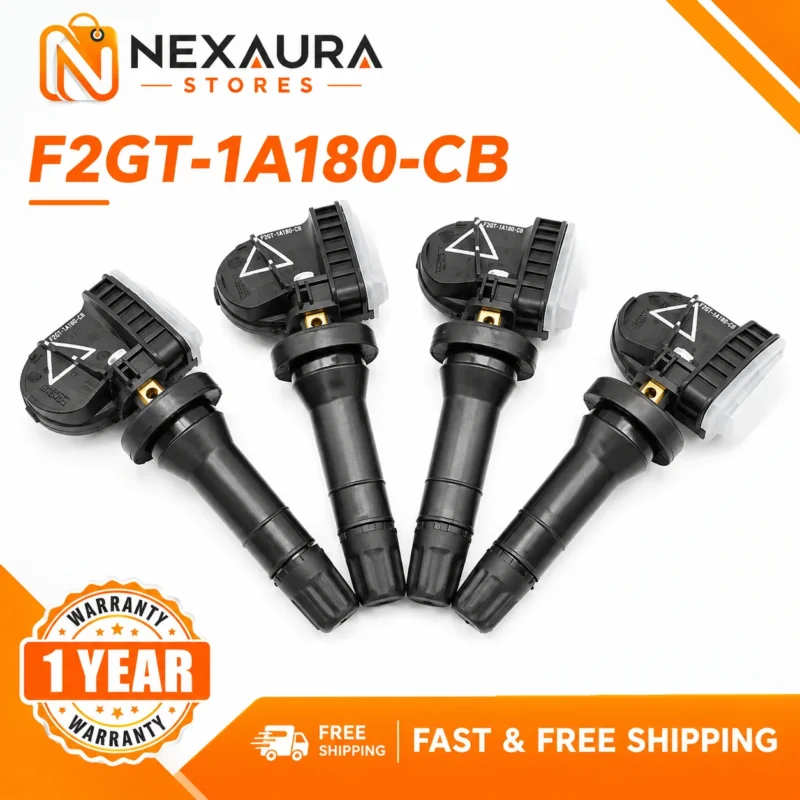
NEXAURA BUYING GUIDE
TPMS Sensors Explained: What That Dashboard Light Means (UK Guide 2026)
That little horseshoe-shaped warning light is your car’s way of telling you something is wrong with your tyre pressure — or with the sensors that monitor it. Here is what it means, what to do about it, and how to replace a faulty sensor without paying dealership prices.
Few dashboard lights cause as much confusion as the TPMS warning. It looks like a horseshoe with an exclamation mark, it lights up for seemingly no reason, and it refuses to go away even after you have checked your tyres. The Tyre Pressure Monitoring System (TPMS) has been mandatory on all new cars sold in the EU and UK since 2014, so if your car was built in the last decade, you almost certainly have one. Understanding what the light is telling you — and when the sensors themselves are the problem — can save you a failed MOT and a hefty garage bill.

What the TPMS light is actually telling you
A solid TPMS light means at least one tyre is significantly under-inflated — typically 25% below the manufacturer’s recommended pressure. This is the straightforward case: your tyres have genuinely lost air, and you need to inflate them.
A flashing light is different. If the TPMS symbol flashes for 60–90 seconds when you start the car and then stays solid, the system itself has a fault — usually a dead sensor battery or a sensor that has stopped communicating. This distinction matters: a flashing light almost always means you need a replacement sensor, not just more air.
How TPMS sensors work
Most modern cars use a direct TPMS: a small sensor is fitted inside each wheel, mounted on the valve stem. Each sensor contains a pressure transducer, a temperature sensor and a radio transmitter powered by a built-in battery. Every few minutes — or immediately when it detects a rapid pressure change — it broadcasts the tyre’s pressure and temperature to the car’s computer.
Direct vs indirect TPMS
A cheaper alternative, indirect TPMS, does not measure pressure at all. It uses the ABS wheel-speed sensors to detect when one tyre is rotating faster than the others (an under-inflated tyre has a smaller rolling radius, so it spins faster). Indirect systems are less precise, cannot tell you which tyre is low, and must be recalibrated every time you inflate your tyres. Direct sensor-based systems are the more accurate and reliable of the two — and the one this guide is about.
The battery problem
The weak point of every direct TPMS sensor is its battery. It is sealed inside the unit and cannot be replaced — when the battery dies (typically after 5–7 years), the whole sensor must be replaced. This is why a TPMS light on a 6-year-old car is often a sensor problem rather than a pressure problem.

Common reasons the TPMS light comes on
1. Genuine pressure loss
The most common cause. A slow puncture, a leaking valve, or simple neglect can leave a tyre well below its recommended pressure. Check the pressures (cold, before driving) with an accurate gauge and inflate to the figure on the driver’s door jamb or fuel flap — not the number moulded on the tyre sidewall, which is the maximum, not the recommended pressure.
2. Cold weather
Tyre pressure drops roughly 1 psi for every 5–6°C the temperature falls. A tyre set correctly in September can be below the warning threshold after the first hard frost in November. This is completely normal — just top up the pressure and the light should clear after a short drive.
3. A dead sensor battery
If your pressures are all correct but the light flashes at start-up and stays on, you are probably looking at a dead sensor. Because the sensor cannot transmit, the system assumes a fault and warns you. Sensor batteries die on a fairly predictable schedule, so on a car that is 5–7 years old, this is the prime suspect.
4. Recent tyre work
Tyre fitters break the bead and handle the valve area, which is exactly where the sensor lives. A sensor can be damaged during a tyre change, or simply not relearned after a wheel rotation. If the light appeared right after new tyres or a repair, go back and ask the fitter to check the sensors.
What to do when the light comes on
First, do not ignore it. Under-inflated tyres increase braking distances, wear out faster, and use more fuel — and driving on a seriously flat tyre can damage the wheel. The correct sequence is simple:
1. Check all four pressures when the tyres are cold, and inflate to the recommended figure.
2. Drive for 10–20 minutes so the system can re-read the sensors.
3. If the light clears, you are done — it was a genuine low-pressure event.
4. If it stays on, or flashes at start-up, the sensors themselves are suspect. A garage can read the fault codes and tell you which sensor has failed, but a flashing light at start-up is the tell-tale sign of a dead sensor battery.
OUR PICK
Set of 4 TPMS Sensors for GM, Buick, Cadillac & Chevrolet — $23.59
A complete set of four direct TPMS sensors running on the 433MHz frequency (part no. 13598773), designed for GM, Buick, Cadillac and Chevrolet models. Each unit monitors pressure and temperature and transmits readings straight to your car’s computer — restoring proper tyre monitoring after a sensor failure. Replacing a dead sensor at a dealership can cost several times this price for a single unit; here you get all four for one low price, so you can refresh the whole axle set or keep spares on hand.
Buying replacement TPMS sensors: what to check
TPMS sensors are not universal, so matching the right unit to your car is essential. Get these three things right and the replacement will work like the original.
1. Frequency
Sensors communicate on either 433MHz or 315MHz, and your car only listens to one. Fit a 433MHz sensor to a 315MHz car (or vice versa) and the system will simply ignore it. Check your owner’s manual or ask your dealer which frequency your model uses.
2. Part number and fitment
Match the OEM part number — for example, part 13598773 covers a wide range of GM-family vehicles. The sensor body also needs to physically suit your wheel’s valve hole. A sensor that is electronically correct but physically wrong is useless.
3. The relearn procedure
After fitting, most cars need a TPMS “relearn” so the computer registers the new sensor IDs. Some GM models do this with a simple dashboard menu procedure; others need a handheld relearn tool that a tyre shop will use in minutes. Ask your fitter to confirm the relearn is done before you drive away — an unregistered sensor will leave the light on.

TPMS and your MOT
In the UK, a malfunctioning TPMS is an MOT failure. Since January 2015, testers have been required to check that the TPMS warning lamp is working and not indicating a fault on cars equipped with the system. An illuminated or flashing TPMS light at MOT time means a fail — which makes a dead sensor more than just an annoyance. If your warning light is on and your pressures are correct, sort the sensors out before your next test.
Frequently asked questions
What does the TPMS light look like?
It is a horseshoe or U-shaped symbol with an exclamation mark inside, representing a cross-section of an under-inflated tyre. On some cars it is accompanied by a “Check Tyre Pressure” or “Tyre Pressure System Fault” message on the dashboard display.
Can I drive with the TPMS light on?
Yes, but check your tyre pressures at the first opportunity. A solid light with correct pressures usually means a sensor fault — inconvenient but not dangerous. A solid light with genuinely low pressure means you should inflate the tyre before driving further, especially at motorway speeds.
Why does the TPMS light come on in cold weather?
Cold air is denser, so tyre pressure falls as temperatures drop — roughly 1 psi per 5–6°C. Tyres inflated to the correct pressure on a mild autumn day can fall below the warning threshold after the first frost. Top up to the recommended pressure and the light should clear after a short drive.
What is the difference between a flashing and a solid TPMS light?
A solid light means low pressure in one or more tyres. A light that flashes for about a minute when you start the car and then stays solid indicates a system fault — most commonly a dead TPMS sensor battery or a sensor that has stopped communicating.
How long do TPMS sensors last?
The sealed battery inside each sensor typically lasts 5–7 years. Because the battery cannot be replaced, the whole sensor must be swapped when it dies. If one sensor fails on an older car, the others are probably close behind — which is why buying a set of four is often the sensible move.
Do I need to replace all four sensors at once?
Not strictly — you can replace just the failed one. But on a car that is 5+ years old, the remaining sensors are likely near the end of their battery life too. Replacing them as a set means one tyre-shop visit instead of several, and a set of four often costs little more per unit than a single sensor at a dealership.
Sort that warning light for good
If your TPMS light flashes at start-up and your pressures are fine, you are almost certainly dealing with a dead sensor. Grab a full set of four 433MHz TPMS sensors for GM, Buick, Cadillac and Chevrolet — $23.59 for the set at Nexaura Stores.