 NEXAURA STORES


 Sell on Nexaura
NEXAURA BUYING GUIDE
Shower Upgrades: Filter vs New Shower Head — Which Should You Buy? (UK Guide 2026)
Dry skin, dull hair, a shower that barely dribbles? Here is the honest difference between a shower filter and a new shower head — and the one upgrade that gives you both for under £8.
When your shower leaves your hair feeling like straw and your skin tight and itchy, the problem is usually not your shampoo — it is the water. Large parts of the UK, from London to Kent to much of the Midlands, sit on hard water. That means your morning shower delivers a daily dose of calcium, magnesium and chlorine straight onto your skin and hair. Over time, that adds up to limescale on the tiles, soap that will not lather, and hair that looks dull no matter what you put on it.
There are two popular, cheap fixes: a shower filter that cleans the water before it reaches you, and a new shower head that boosts pressure and spray quality. Both cost less than a takeaway dinner on our shelves, so price is not really the deciding factor. The question is which one solves your problem — and whether you can get away with just one.
The two upgrades, explained
What a shower filter does
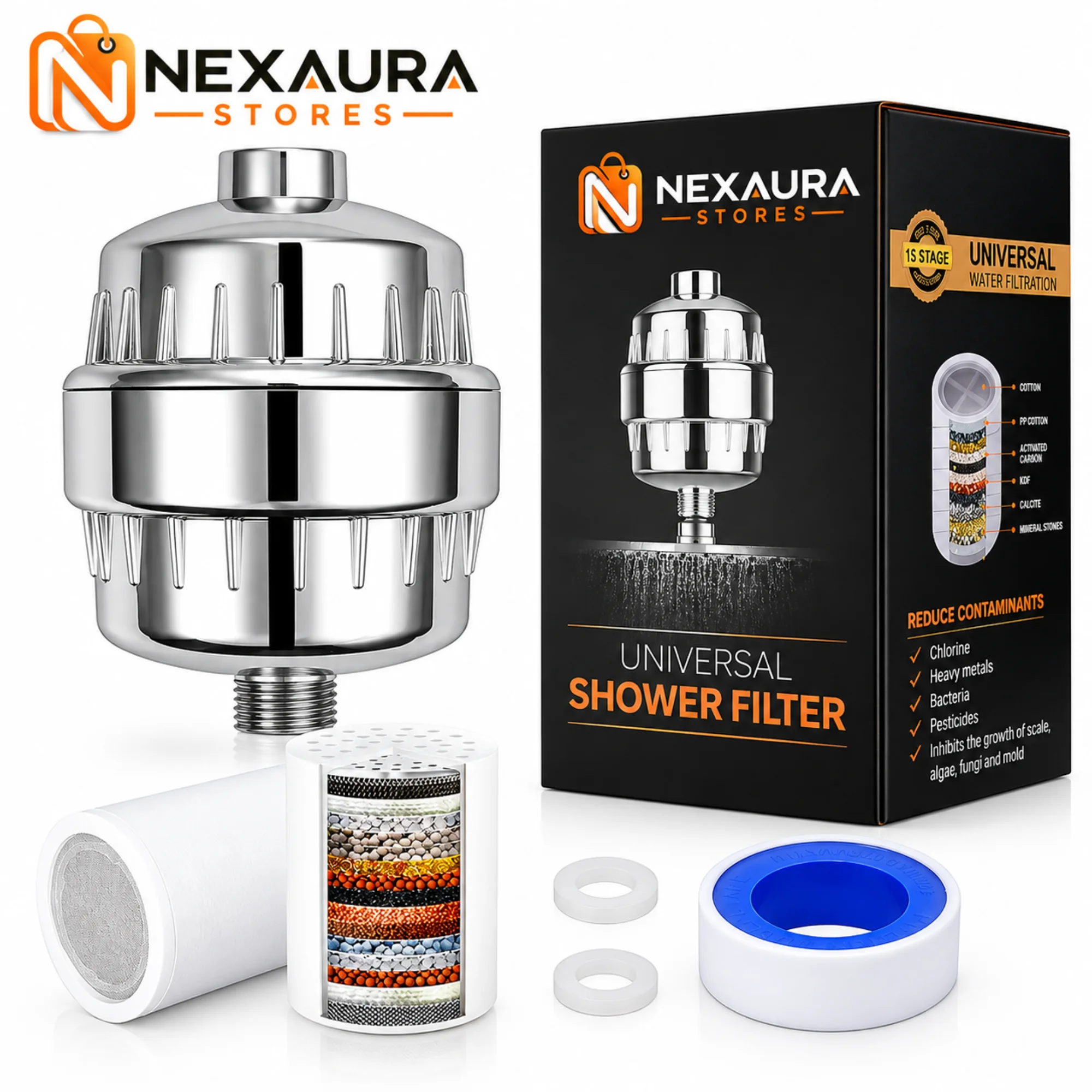
A shower filter sits between your pipe and your shower head (or screws into the head itself) and forces water through a filtration medium — typically activated carbon, KDF media, calcium sulphite, or a combination. These media trap or neutralise chlorine, chloramine, rust, sediment and some of the minerals that make water hard. Multi-stage models stack several of these layers for broader coverage.
The effect is most noticeable on skin and hair: less of the dry, tight feeling after showering, less fading of dyed hair, and less irritation for people with eczema or sensitive skin. Filters do not make water “soft” in the ion-exchange sense — they will not remove limescale from your tiles the way a full water softener would — but they genuinely improve what you feel on your body.
What a new shower head does
A new shower head changes the experience of the water rather than its chemistry. Modern high-pressure heads use smaller, more numerous nozzles and internal flow restrictors to turn a weak dribble into a strong, even spray. Many also include built-in filter pads — a single stage of basic filtration that catches rust and sediment.
If your complaint is pressure — a head that clogs with limescale every few months, or a spray that dies away the moment someone runs a tap — this is the fix. A good head also offers multiple spray modes (rain, massage, mist) and costs next to nothing to swap in.
Hard water: the invisible culprit
Before choosing, it helps to know what you are dealing with. Hard water is simply water with a high mineral content, and around 60% of the UK receives it. The tell-tale signs are chalky white deposits on taps and tiles, soap that refuses to lather, kettle fur, and — the one that matters most here — skin and hair that never feel quite clean.
Chlorine adds a second problem. Water companies dose the supply with it to keep it safe, and while the levels are well within legal limits, chlorine is still a drying agent. If your skin feels worse after showering than before, chlorine is often the reason. A filter targets this directly; a new shower head alone does not.
Filter vs shower head: head-to-head
Here is how the two upgrades compare on the things that actually matter:
- Water quality: filter wins. It removes chlorine, sediment and rust that a plain head leaves untouched.
- Pressure and spray: new shower head wins. A filter cannot fix a tired, clogged head.
- Skin and hair: filter wins on dryness and irritation; a better head wins if poor rinsing is the issue.
- Limescale on fittings: neither fully solves this — but filtered water slows new build-up noticeably.
- Maintenance: a new head is fit-and-forget; a filter needs a cartridge or pad swap every few months.
- Cost: both sit in the £5–8 range, so this is rarely the tiebreaker.
The honest answer: if your water is hard or chlorinated, you want filtration. If your spray is weak or uneven, you want a new head. And if, like most people, you are dealing with a bit of both — look for a product that combines the two. Combination heads with built-in multi-stage filtration exist at the same budget prices, which makes buying them separately increasingly pointless.

What to look for in a shower filter
Not all filters are equal. Stages matter: a 20-stage filter with activated carbon, KDF and calcium sulphite layers covers chlorine, heavy metals, sediment and hardness minerals far better than a single mesh pad. Cartridge life is the running cost — check whether replacement filters are cheap and easy to find, because a filter you never change stops being a filter. Finally, check the thread standard: most UK showers use 1/2-inch fittings, and the filter should screw straight in without tools or plumber tape.
OUR PICK
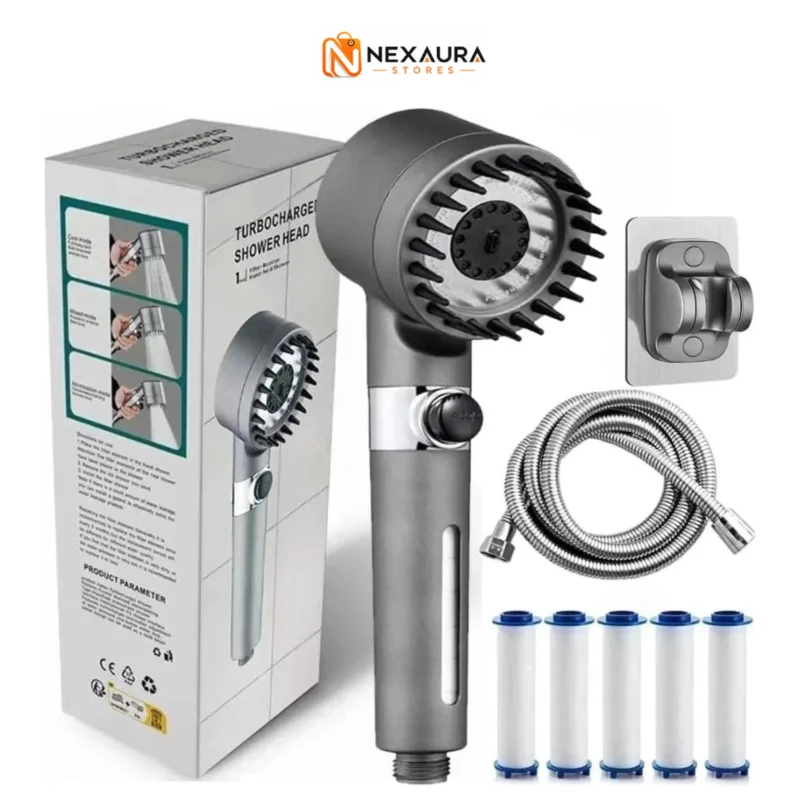
High Pressure Shower Head with 5 Filters — £7.88
Why choose between filtration and pressure when you can have both? This handheld head boosts weak flow into a strong, even spray, runs water through 5 built-in filter stages to cut chlorine, rust and sediment, and ships with a 1.5m hose in the box. Five spray modes cover rain, massage and everything between. The single best-value shower upgrade we stock.
What to look for in a shower head
Start with nozzle count and design — more, finer nozzles spread the flow evenly and resist limescale clogging. Spray modes are worth having: rain for everyday, a focused massage mode for rinsing thick hair, and mist if you prefer a gentler stream. Anti-clog nozzles (soft silicone jets you can wipe clean) save you from the weekly descaling ritual. And check the head size: a 10cm head gives a luxurious rain feel but needs decent flow behind it; smaller heads suit low-pressure bathrooms.
If your water is hard, a standalone high-capacity filter is still the stronger move. A 20-stage shower head filter with full activated-carbon and KDF media goes further on chlorine and hardness minerals than the pads built into combination heads — ideal for sensitive skin, eczema-prone households, or keeping hair dye vibrant.
Do not forget the hose
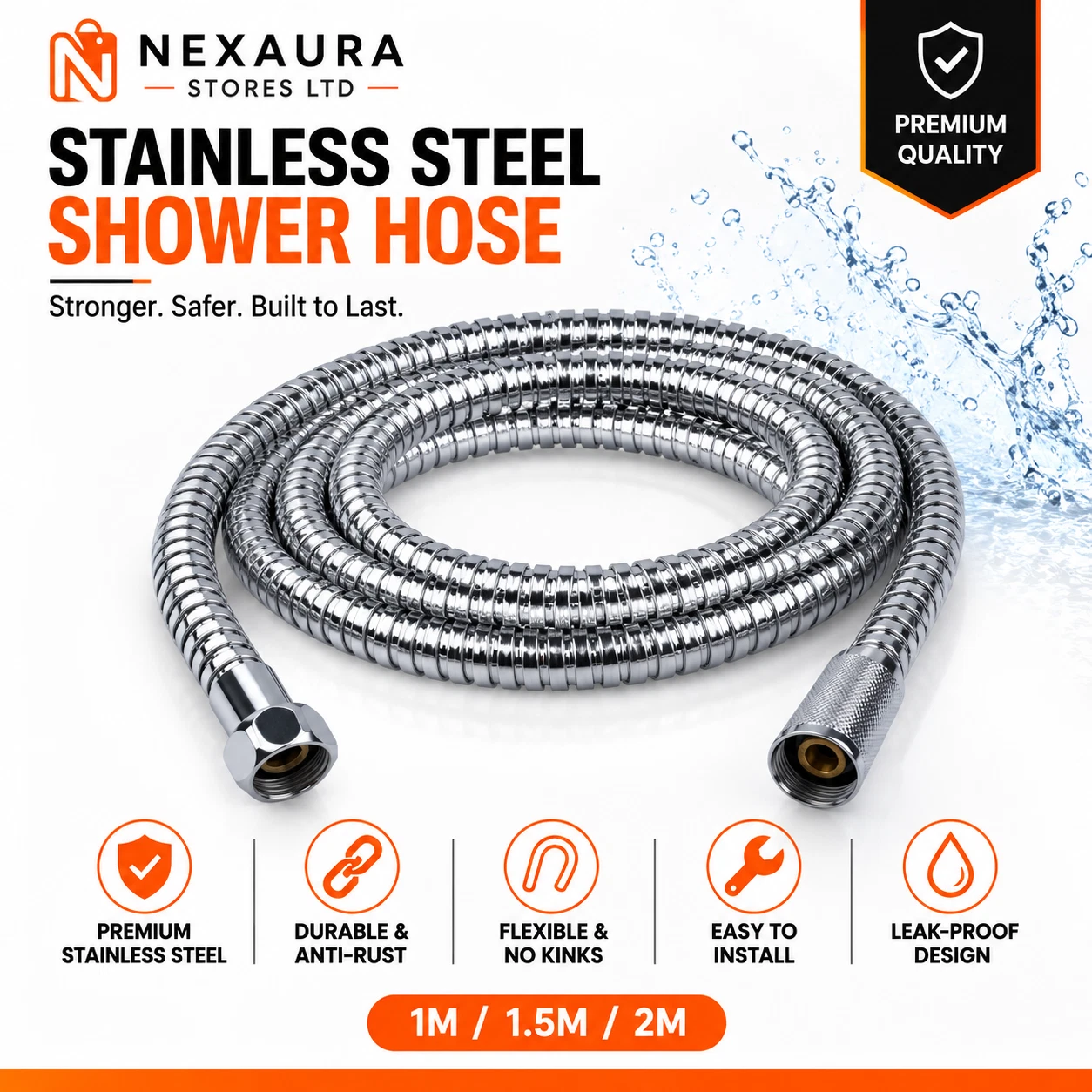
It is the least glamorous part of the upgrade and the one most people skip — until their old plastic hose cracks, kinks or starts leaking at the coupling. A stainless steel flexible hose (available in 1m–3m lengths) resists kinks, keeps its chrome finish for years, and costs around £5. If your head is new and the hose is old, replace them together.
Fitting your upgrade in under 10 minutes
One of the best things about shower upgrades is that they need no plumber. Unscrew the old head by hand (or with an adjustable spanner on stubborn ones), wrap a turn or two of PTFE tape on the threads if you have it, and screw on the new head or filter. Hand-tight plus a quarter turn is plenty — overtightening cracks plastic threads. Run the water for a minute to flush any carbon dust, check for drips at the joints, and you are done.
Frequently asked questions
Do shower filters actually work for hard water?
Yes — with one caveat. Shower filters reduce chlorine, sediment, rust and some hardness minerals, and most users notice softer-feeling skin and hair within a week. They do not convert hard water into soft water the way an ion-exchange softener does, so kettle-scale will still form. For what you feel in the shower, they genuinely help.
Should I get a shower filter or a new shower head?
Get a filter if your skin or hair feels dry after showering, or you live in a hard-water area. Get a new head if your spray is weak, uneven or clogged. If you suffer from both problems, choose a high-pressure head with built-in filtration — it solves both in one fitting.
How often do shower filter cartridges need replacing?
Most cartridges last 2–6 months depending on household size and water quality. Signs it is time: falling water pressure through the filter, the return of the dry-skin feeling, or any visible discolouration of the cartridge. Set a calendar reminder when you install it.
Will a new shower head fit my existing pipe?
Almost certainly. The vast majority of UK showers use a standard 1/2-inch BSP thread, and replacement heads, filters and hoses follow the same standard. They screw straight on — no tools required in most cases.
Can a shower filter help with eczema or sensitive skin?
Many people with eczema or sensitive skin report less itching after switching to filtered water, because chlorine and minerals are known skin irritants. A filter is not a medical treatment, but removing two daily irritants is a sensible, low-cost step. See your GP if symptoms persist.
Do high-pressure shower heads use more water?
Not necessarily. Good designs increase spray velocity through nozzle engineering rather than higher flow, and many include flow restrictors that keep water use — and your bills — in check while the shower feels stronger.
READY TO UPGRADE YOUR BATHROOM?
Shop Home & Garden at Nexaura Stores
Shower filters, high-pressure heads and accessories — secure checkout and UK delivery as standard.