 NEXAURA STORES

 Sell on Nexaura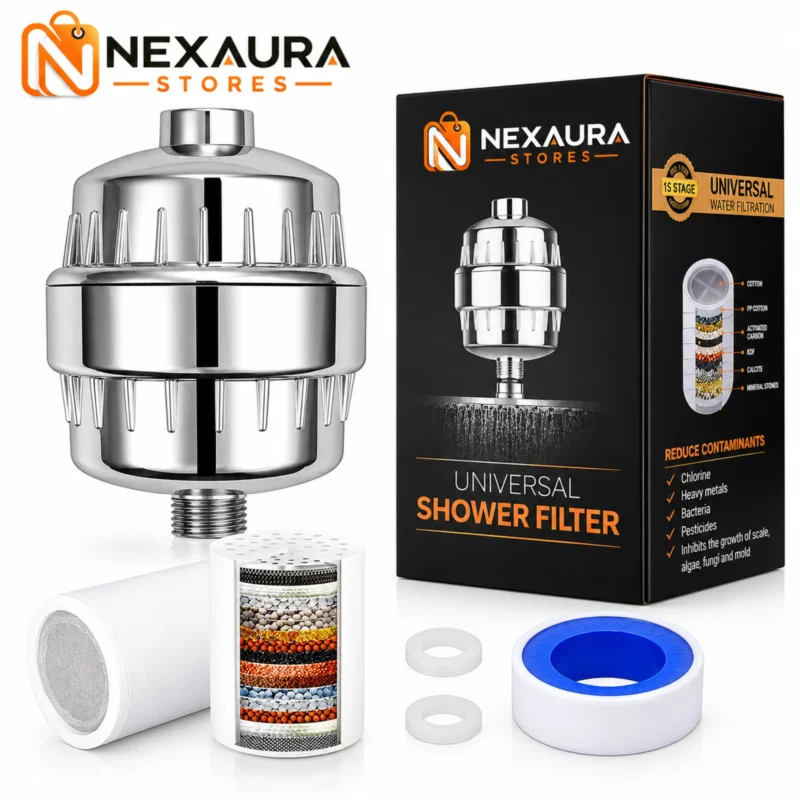
NEXAURA BUYING GUIDE
Do Shower Filters Actually Work? Hard Water, Explained (2026 UK Guide)
Millions of UK homes sit on hard water, and a little in-line shower filter promises softer showers, kinder skin and less chlorine. Here is what these filters genuinely do, what they cannot do, and whether a £7.38 one is worth your money.
If you live anywhere from London to Norwich, you will know the signs of hard water: white crust on the shower head, a kettle that furs up in weeks, soap that never quite lathers, and skin that feels tight after a wash. Shower filters have exploded in popularity as a cheap fix — a small cartridge that screws between your shower arm and shower head, claiming to soften water and strip out impurities. But do shower filters actually work, or is it mostly marketing?
The honest answer sits in the middle. A good shower filter does several genuinely useful things, and it does them for less than the price of a pizza. But it is not the same as a full water softener, and some of the bolder claims deserve scrutiny. This guide explains exactly what happens inside one, so you can decide with clear eyes.
What hard water actually is
Hard water is simply water that contains high levels of dissolved minerals — mainly calcium and magnesium — picked up as rainwater filters through chalk and limestone. Much of southern and eastern England sits on chalk aquifers, which is why the South East, East Anglia and parts of the Midlands and North have the hardest water in the UK. Over half of UK homes receive hard or very hard water.
Those minerals are not a health hazard — calcium and magnesium are harmless to drink — but they are a nuisance. Calcium carbonate (limescale) builds up on shower heads, glass screens and taps, making them dull and clogged. It reacts with soap to form scum instead of lather, which means more product, more rinsing, and that squeaky-tight feeling on skin. Many people with sensitive or dry skin, eczema-prone skin, or colour-treated hair notice the difference immediately when they wash in soft water.
How a shower filter works
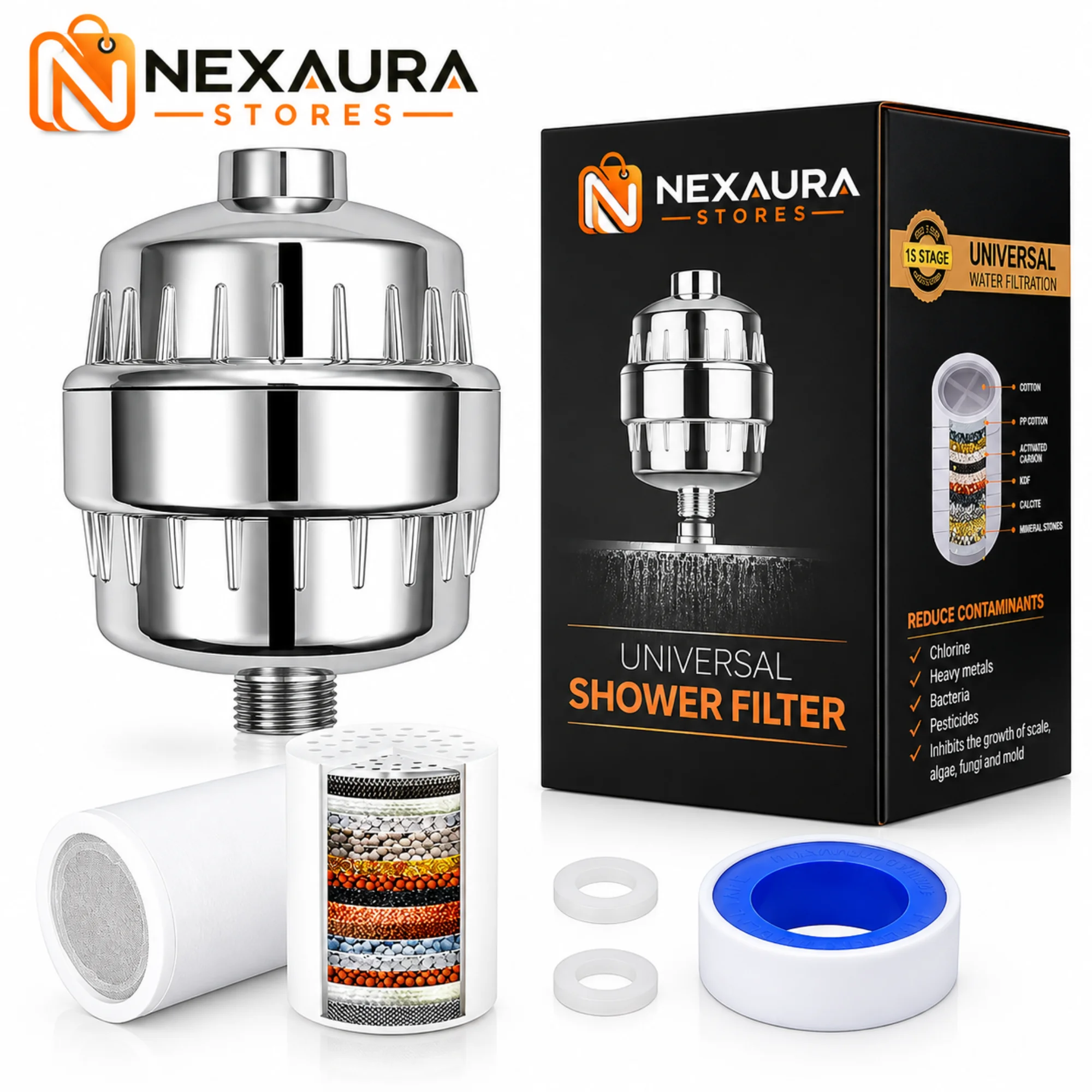
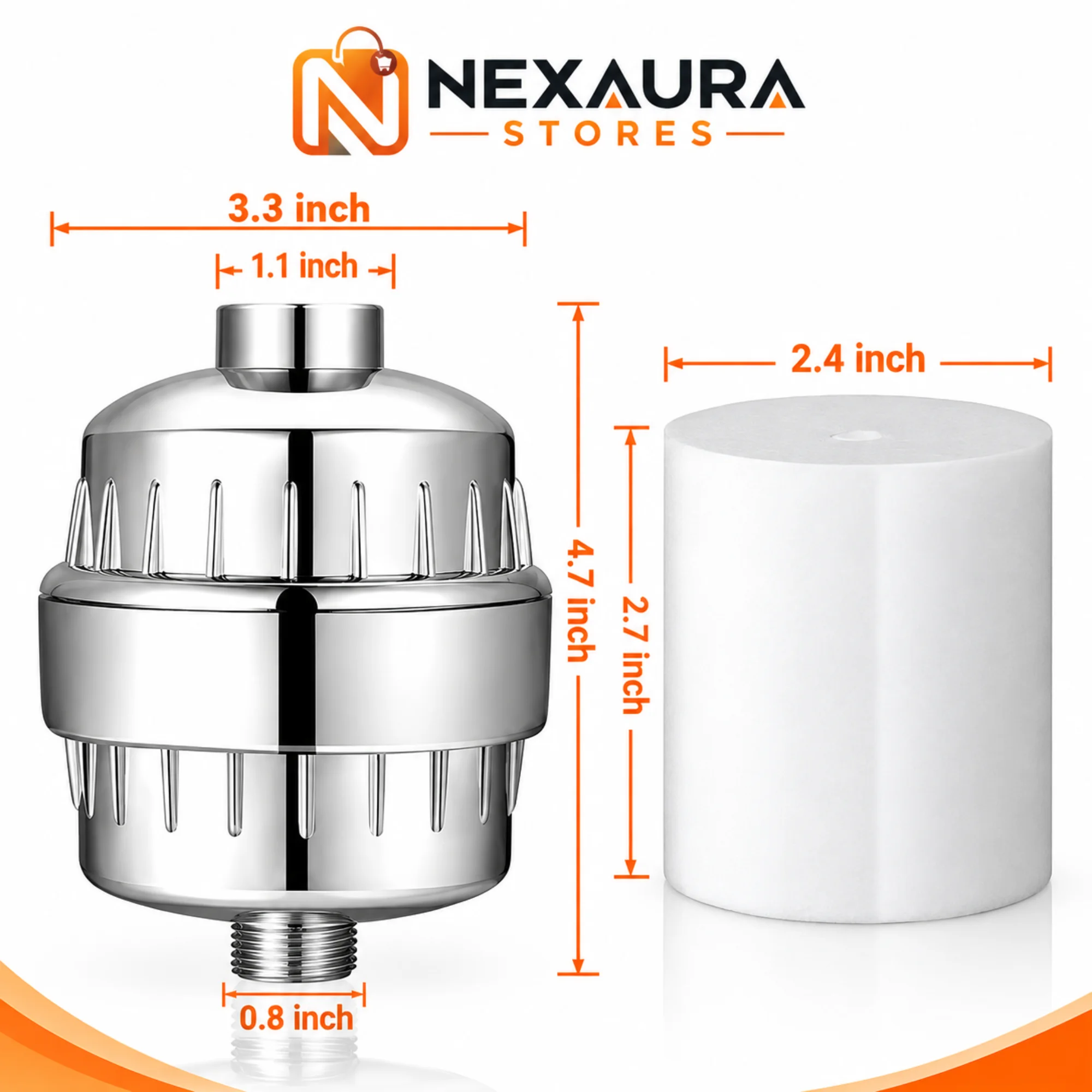
A shower filter is a small canister — usually the size of a hockey puck or a short cylinder — packed with layered filtration media. It installs in seconds between your existing shower head and the shower arm or hose. Every litre of water passes through the media on its way out, and different layers target different impurities.
The most common media you will see are:
- KDF-55 (kinetic degradation fluxion). A copper-zinc alloy that uses a redox reaction to reduce free chlorine and, to a degree, some heavy metals. It is the workhorse of most shower filters and is also mildly antibacterial, which helps the cartridge last longer.
- Activated carbon. Adsorbs chlorine, odours and organic compounds that affect taste and smell. In a shower filter its contact time is short, so it helps rather than guarantees.
- Calcium sulphite. Very effective at neutralising chlorine at the high temperatures of a hot shower — where ordinary carbon struggles — which is why it appears in many multi-stage filters.
- Vitamin C (ascorbic acid) blocks. Neutralise chlorine and chloramine quickly; often used in vitamin-infused filter heads.
- Mineral balls (maifan, tourmaline). Claimed to adjust water feel and pH. The evidence here is softer, but they do add to the staged design and may help reduce scale particles.
A “20-stage” filter simply means its cartridge stacks many of these layers. More stages generally means broader filtration — sediment, rust, chlorine, odours — rather than one magic ingredient.
What shower filters actually do
Here is what you can reasonably expect from a well-made shower filter, based on how the media actually behaves:
- Reduce chlorine. This is the clearest, best-evidenced benefit. UK tap water is chlorinated to keep it safe, and KDF/calcium sulphite media genuinely cut the chlorine that reaches your skin and hair. People who find chlorinated water drying often notice the biggest change here.
- Cut sediment, rust and odours. Filters trap fine particles — grit from old pipes, sediment, rust flakes — and activated carbon takes the edge off chemical smells. If your water occasionally runs discoloured, this is where a filter earns its keep.
- Softer-feeling water on skin and hair. Less chlorine and sediment means soap lathers better and rinses cleaner. Many users report less post-shower tightness and shinier hair. Colour-treated hair may hold colour a little longer without chlorine stripping it.
- Protect the shower head itself. Trapping sediment and some scale-forming particles before they reach the nozzles keeps spray holes clearer for longer — a small but real maintenance win.
What they cannot do (managing expectations)
Honesty matters here, because the packaging on some filters overpromises. A shower filter is not a water softener in the technical sense. True softening means removing the dissolved calcium and magnesium ions themselves, and that requires either ion-exchange resin (regenerated with salt) or reverse osmosis. A small shower-head cartridge does not have the capacity or the chemistry to do that at any meaningful scale.
So a shower filter will not: make your kettle stop furring up, turn very hard water chemically soft, or eliminate limescale on glass screens entirely. What it does is remove the things that make hard-water showers unpleasant — chlorine, sediment, odour — and it reduces some of the scale-forming particles. Think of it as a shower improver rather than a softener, and it is priced like one: a proper whole-house softener costs hundreds of pounds and needs plumbing work, while a good shower filter costs less than a takeaway.
OUR PICK
20 Stage Shower Head Filter Purifier for Hard Water — £7.38
Twenty stages of filtration media — including KDF, activated carbon and mineral layers — designed to reduce chlorine, sediment and odours from hard water. Fits between any standard shower arm and shower head in minutes, no tools needed. The simplest, cheapest upgrade you can make to a hard-water shower.
A second option: filtered shower head with hose
If your shower head is old or clogged, you might prefer to replace the whole thing rather than bolt a filter onto it. Filtered shower heads combine the filtration cartridge with a new high-pressure head, so you get cleaner water and a stronger spray pattern in one purchase.

The High Pressure Shower Head with 5 Filters — £7.88 bundles five built-in filters with a handheld head and a 1.5-metre hose. It is a good pick if you rent (no permanent changes, just unscrew the old head), if your current head has lost pressure from limescale, or if you simply want one box that solves filtration and flow together.
What to look for when buying a shower filter
- Multi-stage media, named explicitly. “20-stage” is a good sign, but check the listing names KDF, carbon or calcium sulphite rather than just “mineral balls”. Named media indicates a serious design.
- Standard 1/2-inch universal fitting. Virtually all UK shower arms and hoses use the same thread. A filter with universal fittings installs without adapters or tools.
- Replaceable cartridges. The media gets used up — typically every 3–6 months depending on water quality and household size. A filter with replaceable cartridges is far cheaper long-term than a sealed disposable unit.
- No meaningful pressure loss. A well-designed filter barely affects flow. If reviews complain about weak pressure, the cartridge design is poor — move on.
- Realistic claims. “Reduces chlorine and sediment” is credible. “Turns hard water soft” or “removes 99% of limescale” is marketing — no small cartridge does that.
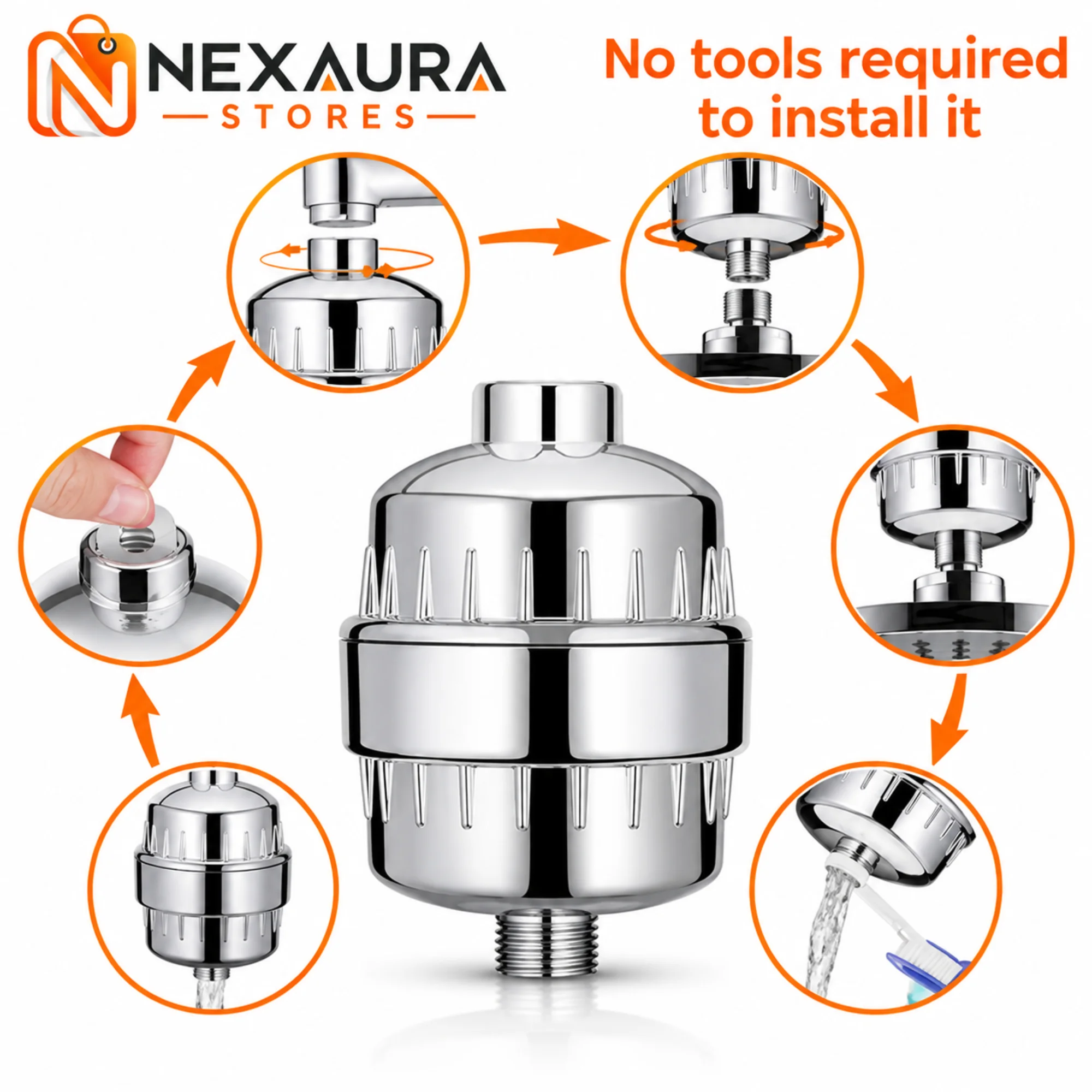
Installation and maintenance in under five minutes
Fitting a shower filter is one of the easiest home upgrades there is. Unscrew your existing shower head from the arm or hose, screw the filter canister onto the thread (hand-tight is enough — a turn with a cloth-covered wrench for insurance), then screw the shower head back onto the filter. Run the water for a minute to flush any loose carbon dust, and you are done. No plumber, no tools worth mentioning, and it is completely renter-friendly since it unscrews cleanly.
Maintenance is just cartridge replacement. In hard-water areas with a busy household, change the cartridge every 3–4 months; in softer areas or single-person homes, 6 months is fine. If the water flow starts to dip or you notice the old chlorine smell returning, the media is spent. At £7.38 for the whole unit, the ongoing cost is trivial compared with bottled or filtered water alternatives.
Frequently asked questions
Do shower filters really work?
Yes — for what they are designed to do. Good shower filters genuinely reduce chlorine, sediment, rust and odours, which makes water kinder to skin and hair and keeps shower heads cleaner. They do not, however, perform true ion-exchange softening, so they will not eliminate limescale at the chemical level.
Will a shower filter stop limescale?
Partially. A filter traps sediment and some scale-forming particles, so shower nozzles stay clearer for longer, but dissolved calcium and magnesium still pass through and can form limescale over time. For full limescale elimination you need a whole-house ion-exchange softener.
How often do you replace a shower filter cartridge?
Every 3–6 months is typical. Hard-water areas and larger households use up the media faster. Reduced flow or the return of a chlorine smell are signs the cartridge needs changing.
Do shower filters reduce water pressure?
A well-designed filter causes minimal pressure loss — most users notice no difference. If your pressure drops sharply after fitting one, the cartridge is clogged and due for replacement, or the unit’s design is poor.
Shower filter vs water softener: which should I get?
It depends on the problem. If your main complaint is dry skin, dull hair or chlorine smell in the shower, a £7.38 filter solves it directly. If limescale is destroying your appliances, kettle and pipework, you need a whole-house softener — a much bigger investment. Many households happily use both.
Are shower filters easy to install?
Very. They screw between your existing shower head and the arm or hose using standard 1/2-inch threads — no tools or plumbing skills needed, and they unscrew cleanly, making them ideal for renters.
UPGRADE YOUR BATHROOM FOR UNDER £8
Shop Home & Garden at Nexaura Stores
Shower filters, bathroom upgrades and everyday home essentials — secure checkout and UK delivery as standard.