 NEXAURA STORES


 Sell on Nexaura

NEXAURA BUYING GUIDE
Marketplace vs High Street: Where Your Money Goes Further (UK Guide 2026)
Same products, wildly different prices. Here is why online marketplaces consistently beat the high street on value — and the three picks that prove it.
Walk into any high-street electronics shop and you will pay £25–£40 for a pair of budget wireless earbuds. Order a comparable pair from an online marketplace and you can pay £10.99 — sometimes less than half. This is not a sale or a clearance trick. It is the everyday reality of how the two retail channels price everyday goods, and understanding why can save you hundreds of pounds a year.
In this guide we look honestly at both sides: why marketplaces usually win on price, when the high street still earns your money, and how to shop an online marketplace so you get the savings without the guesswork. We will use three real products from our own shelves to ground the comparison in facts, not theory.
Why the high street charges more
It is not greed. A high-street store carries costs that simply do not exist online. Prime retail rent in a UK town centre can run to tens of thousands of pounds a year for a modest unit, and every staffed hour, every lit display case and every square metre of stockroom feeds into the price on the shelf. A shopper pays for the building as much as the product.
Then there is the stock problem. A physical store has limited shelf space, so it stocks fewer items and each one must justify its slot with a bigger margin. Add national chains’ centralised logistics — distribution centres, delivery lorries, branded packaging — and a £12 product online can easily become a £25 product on the high street before anyone has made a profit on it.

TWS Bluetooth 5.4 headset — just £10.99 on our marketplace.
Three reasons marketplaces win on price
1. Lean operations, lean prices
An online marketplace has no shop front, no shelf rent and no sales staff standing over a till. Sellers store goods in warehouses or ship directly from suppliers, and the savings are passed straight into the listing price. That is why everyday essentials — chargers, adapters, kitchen gadgets — routinely sell online at 30–60% below their high-street equivalents.
2. Sellers compete in the open
On a high street you can compare prices at perhaps three or four shops within walking distance. On a marketplace, dozens of sellers offer the same category side by side, with reviews, ratings and sold counts visible to everyone. That transparency forces prices down: a seller who overcharges simply gets ignored. The high street has no such instant accountability.
3. Direct, short supply chains
Many marketplace sellers source close to the manufacturer and ship in bulk, cutting out layers of distributors, wholesalers and regional depots. Every layer removed is a margin that no longer needs padding into the price you pay. The product that reaches your door is the same quality — it just travelled a shorter, cheaper route.
A real price comparison
Take our TWS Bluetooth 5.4 headset at £10.99. It pairs Bluetooth 5.4 with secure ear-hook fit, stereo sound and a built-in microphone for calls. Walk the high street and budget earbuds with comparable specs typically start at £24.99 and climb past £35 once a recognisable brand name is on the box. The underlying technology is the same; the difference is almost entirely overhead and brand margin.
OUR PICK
TWS Bluetooth 5.4 Headset with Ear Hooks — £10.99
Stable Bluetooth 5.4 connection, ear-hook design that stays put during workouts, stereo sound for music and podcasts, and a microphone for hands-free calls. Proof that you do not need a high-street markup for genuinely good budget earbuds.
When the high street still wins
Honesty matters: marketplaces are not better at everything. There are three situations where the high street earns its premium. First, try-before-you-buy — shoes, headphones with subtle sound differences, anything where fit and feel decide. Second, urgency — a phone charger when your phone is at 4% is worth paying extra for today. Third, complex servicing — major appliances or anything needing in-person setup and warranty handling.
For everything else — standardised, spec-driven products where you know what you want — the marketplace wins. A memory foam seat cushion does not need to be tested in-store; the specs (density, size, washable cover) tell you everything. At £9.99 online versus £20–£30 for equivalents in high-street homeware shops, the maths is brutal.

Memory foam seat cushion — £9.99 vs £20+ on the high street.
OUR PICK
Memory Foam Seat Cushion — £9.99
Ergonomic coccyx-support design for office chairs and car seats, with a washable cover. Office workers spending eight hours a day seated notice the difference within a week — for half the high-street price.
How to shop a marketplace smartly
The savings are real, but so is the need for a little discipline. The shoppers who get the best results follow a simple routine before they buy.
1. Check seller feedback, not just the price
The cheapest listing is not always the best one. Look for sellers with a history of positive feedback and verified reviews. On Nexaura Stores, every seller page shows real customer feedback — use it the way you would use a word-of-mouth recommendation.
2. Read the specifications, not the hype
Good marketplace listings give you the facts: dimensions, materials, battery life, compatibility. Our 20-stage shower filter lists exactly what it removes from hard water at £7.38 — no vague promises, no brand-tax fluff. Specs are your quality control.
3. Factor in delivery time honestly
Most marketplace orders arrive within days, but if you need it tomorrow, say so to yourself before you buy. Ordering ahead turns delivery time into a non-issue and lets you keep the full discount.
4. Know the returns policy before checkout
Reputable marketplaces publish clear returns and refund policies. Check them once per store and you will never be trapped by a bad purchase. It takes thirty seconds and removes the main perceived advantage of the high street.
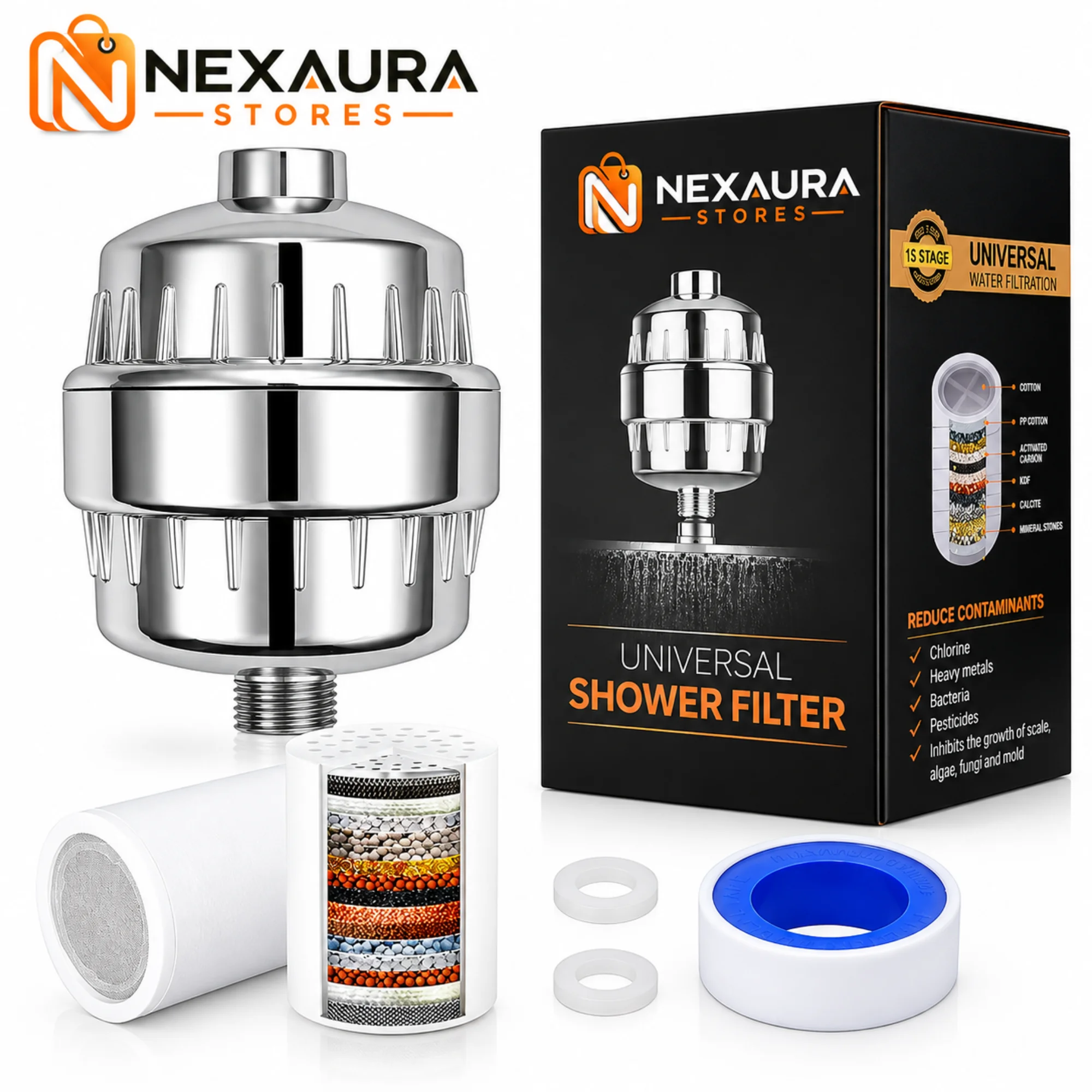
20-stage shower filter — just £7.38 with honest specs.
OUR PICK
20-Stage Shower Head Filter — £7.38
Purifies hard water with a 20-stage filtration system — softer skin and hair, less limescale on your shower. A home upgrade that costs less than a pizza, with the specifications published up front.
The hidden saving nobody talks about
Beyond the sticker price, marketplaces save you from the high street’s most expensive feature: impulse buying. High-street stores are designed — lighting, layout, end-cap displays — to make you buy things you did not come for. Online, you search for what you need, compare, and check out. That single behavioural difference can be worth more than the price gap itself.
There is also the time cost. A high-street trip burns an hour or more: travel, parking, queues. An online order takes five minutes from your sofa. If your time has any value at all, the marketplace wins twice.
Frequently asked questions
Is it really safe to buy from an online marketplace?
Yes, provided you buy from a marketplace with visible seller feedback and clear buyer protection. Check the seller’s ratings, read a few reviews, and confirm the returns policy — the same due diligence you would apply anywhere.
Why are marketplace prices so much lower than the high street?
Mostly overhead. Online sellers avoid shop rent, in-store staff and shelf-space pressure, and open competition between sellers forces prices down. The product itself is often identical — the price gap is the cost of the building, not the goods.
When should I still buy from the high street?
Buy in person when you need to test fit or feel (shoes, some clothing, premium headphones), when you need the item the same day, or when it requires in-person setup and servicing. For standardised, spec-driven products, the marketplace is almost always better value.
How do I avoid low-quality sellers on marketplaces?
Read seller feedback and verified reviews before buying, check that listings publish real specifications (not just marketing claims), and stick to marketplaces with clear refund policies. A seller with hundreds of positive reviews is a safer bet than an anonymous rock-bottom price.
Does cheaper mean worse quality?
Not necessarily. A £10.99 pair of earbuds online can use the same Bluetooth 5.4 chipset as a £29.99 high-street pair — you are skipping the brand margin and the shop rent, not the technology. Judge quality by specifications and reviews, not by price tag.
STOP OVERPAYING ON THE HIGH STREET
Shop Smarter at Nexaura Stores
Marketplace prices, verified sellers, buyer protection — everyday essentials without the high-street markup. Secure checkout and UK delivery as standard.