 NEXAURA STORES

 Sell on Nexaura
NEXAURA BUYING GUIDE
Resistance Bands: Build a £3.99 Home Gym That Works (UK 2026)
No gym membership, no bulky equipment, no excuses. Here is how a simple set of loop bands can give you a genuine full-body workout at home.
Gym memberships in the UK now average well over £30 a month, and a basic set of dumbbells can easily cost £50 or more. Yet some of the most effective strength training you can do requires nothing heavier than a few strips of elastic latex. Resistance bands — also called loop bands or exercise bands — have quietly become one of the best-selling home fitness products in Britain, and it is not hard to see why.
They weigh almost nothing, they fit in a drawer, they cost less than a takeaway coffee order, and they can genuinely replace a surprising amount of gym equipment. Whether you want to build strength, tone up, rehabilitate an injury, or simply stay active without leaving the house, a set of resistance bands is one of the smartest fitness purchases you can make in 2026.
In this guide we explain why resistance bands work so well, how to choose the right set, and the best exercises to build a complete home workout around them — all for under four pounds.
Why Resistance Bands Actually Work
It is natural to be sceptical. How can a stretchy band compete with iron weights? The answer lies in a concept called variable resistance. Unlike a dumbbell, which weighs the same throughout the movement, a band gets harder the further you stretch it. This means your muscles work hardest at the point of peak contraction — exactly where you want the challenge.
Sports scientists have repeatedly found that band training produces comparable strength gains to free weights for most people, particularly beginners and intermediate trainers. A well-known advantage is joint-friendliness: because there is no momentum and no heavy load slamming your joints at the bottom of a movement, bands are widely recommended by physiotherapists for rehabilitation and for older adults.
Here is what makes them such good value:
- Full-body training: Legs, glutes, back, chest, shoulders, arms and core — every major muscle group can be trained with bands.
- Portable: The whole set weighs a few hundred grams and rolls up smaller than a pair of socks. Take your gym anywhere.
- Scalable: Bands come in multiple resistance levels, so you can start light and progress as you get stronger.
- Joint-friendly: Smooth, controlled tension with no jarring impact — ideal if you have sensitive knees, shoulders or back.
- Versatile: Use them for strength work, stretching, warm-ups, Pilates-style toning, or physio rehab exercises.
OUR PICK
Resistance Bands Exercise Set – Loop Fitness Bands for Home Gym & Yoga
A complete set of loop bands in multiple resistance levels — perfect for full-body workouts, stretching and toning at home. Lightweight, durable latex construction that goes wherever you go.
£3.99
How to Choose the Right Resistance Bands
Not all bands are equal. Here is what to look for when buying a set in the UK:
1. Get a set, not a single band
A single band is limiting. Different exercises need different resistance — your legs are far stronger than your shoulders, for example. A proper set (typically 4–5 bands) lets you match the resistance to each movement and gives you room to progress over time.
2. Check the resistance range
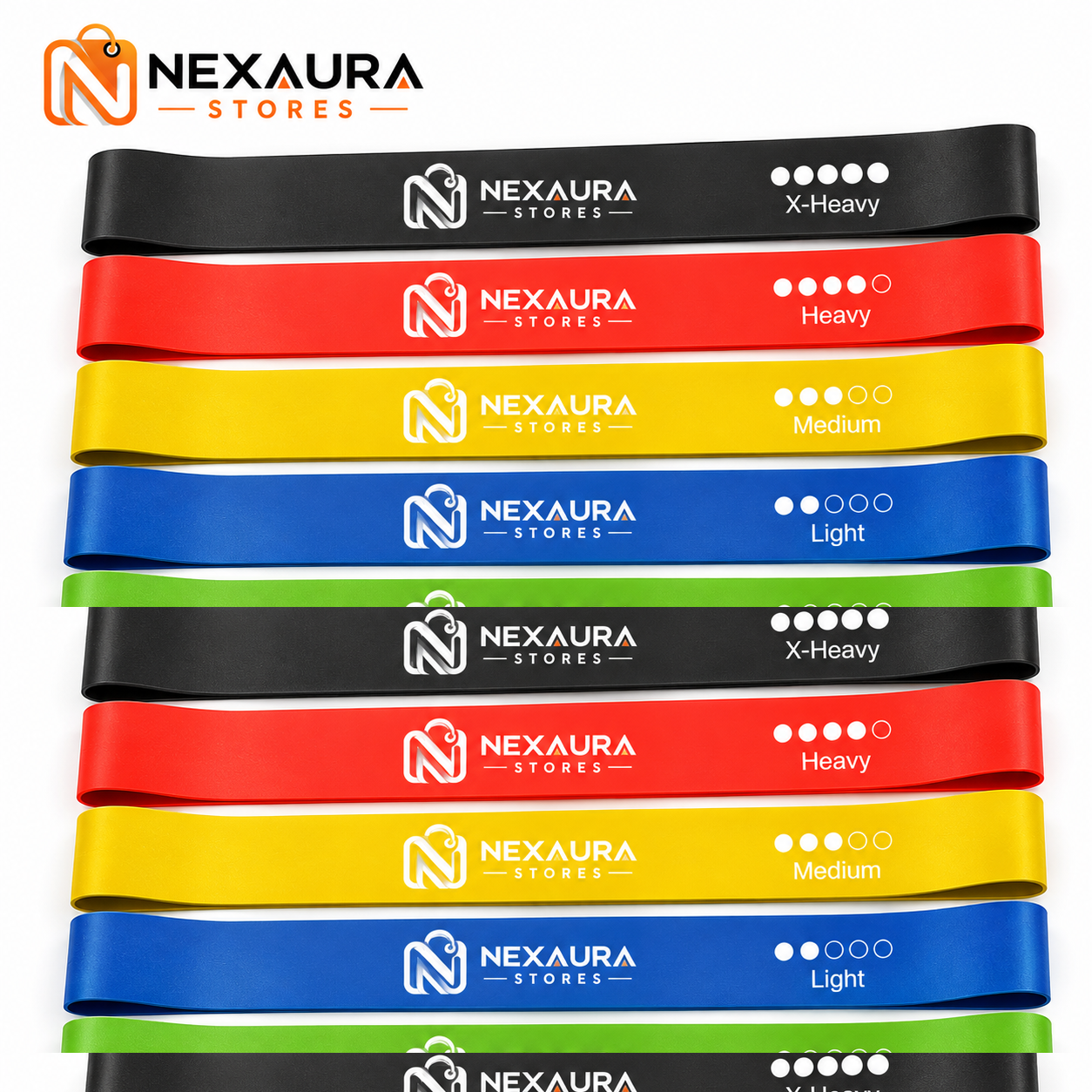
Bands are usually colour-coded from light to extra-heavy. Beginners should start with light and medium bands; the heavier bands become useful as you build strength. If a set only includes one or two levels, you will outgrow it quickly.
3. Look for durable, snap-resistant latex
Cheap bands can snap or lose elasticity after a few weeks. Quality loop bands are made from natural latex with a smooth, consistent stretch. Before each workout, give your bands a quick visual check for nicks or tears — a sensible habit whatever brand you buy.
4. Loop bands vs tube bands with handles
Flat loop bands (the continuous circle type) are the most versatile for lower-body work, glute activation and stretching. Tube bands with handles suit pressing and rowing movements. For a £3.99 home gym, a loop band set covers the most ground.
A Simple Full-Body Band Workout
You do not need a complicated programme. This beginner-friendly routine hits every major muscle group in about 25 minutes. Perform each exercise for 10–15 repetitions, rest 30–60 seconds, and complete 2–3 rounds.
Lower body
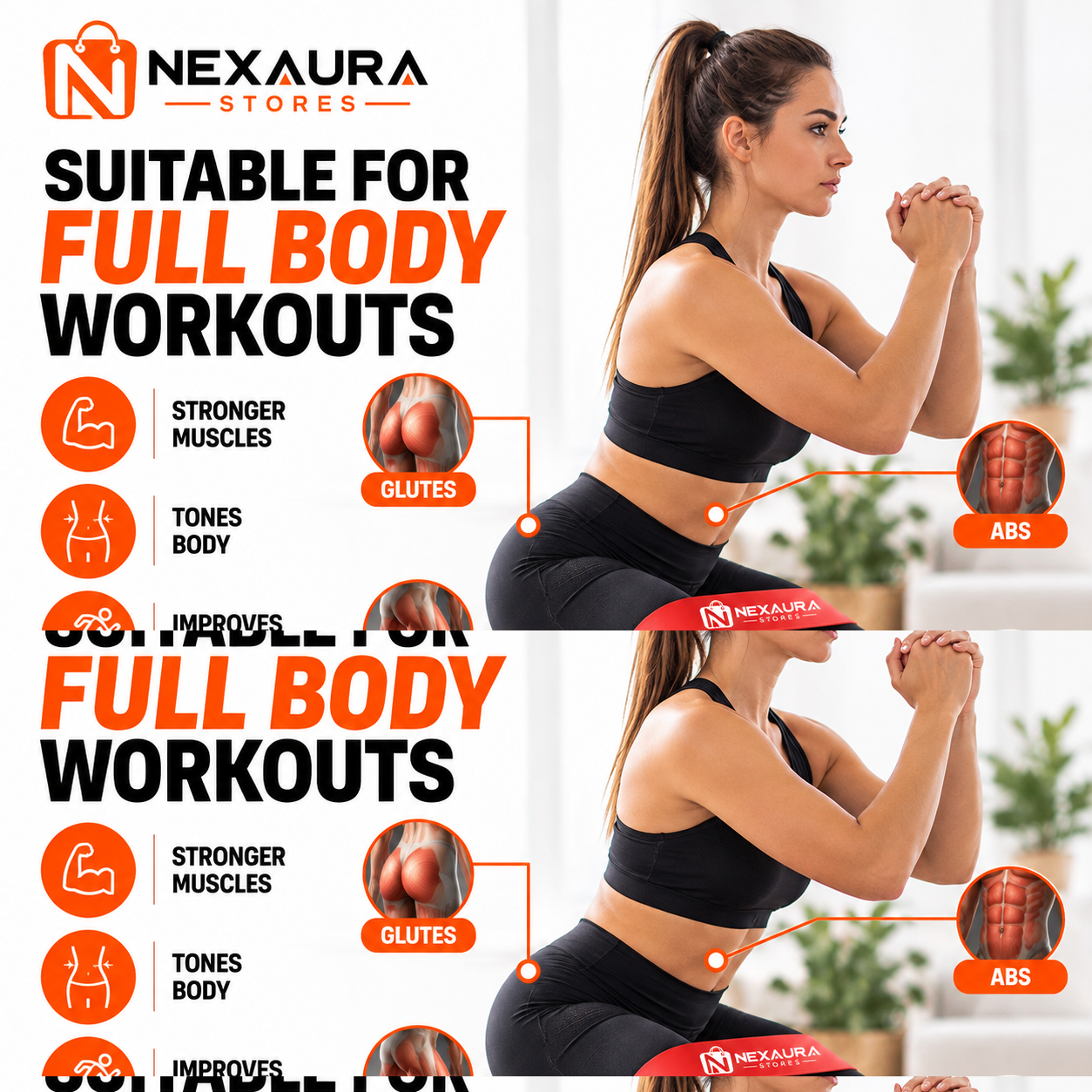
- Banded squats: Stand on the band with feet shoulder-width apart, hold the other end at shoulder height, and squat. The band adds resistance exactly where your glutes work hardest.
- Glute bridges: Loop a band just above your knees, lie on your back, and drive your hips up. Superb for glutes and hamstrings.
- Lateral walks: Band around your ankles or knees, stay low, and step sideways. Brilliant for hip stability and often used in physio.
Upper body
- Banded push-ups: Drape the band across your upper back and hold the ends under your hands. Instantly makes push-ups harder.
- Standing rows: Anchor the band around a sturdy post or door, pull towards your chest, squeeze your shoulder blades. Great for posture.
- Overhead press: Stand on the band and press upwards. Works shoulders and triceps with constant tension.
Core
- Pallof press: Anchor the band at chest height, stand sideways, and press straight out. One of the best anti-rotation core exercises there is.
- Dead bugs with band: Adds gentle resistance to a classic core stability move.
Frequently Asked Questions
Can resistance bands really build muscle?
Yes. Studies show bands produce similar muscle activation and strength gains to free weights for most trainees, provided you train close to fatigue and progress the resistance over time. They are especially effective for beginners and intermediate lifters.
How long do resistance bands last?
With normal use, a quality latex set lasts many months to over a year. Keep them away from sharp objects, avoid overstretching beyond about 2.5 times their resting length, store out of direct sunlight, and inspect before each session.
Are resistance bands good for beginners?
They are ideal for beginners. You can start with the lightest band, learn proper form without heavy loads, and the smooth resistance is kinder on joints than dumbbells. Many personal trainers start clients on bands before progressing to weights.
Can I use resistance bands every day?
Light band work such as stretching, mobility and glute activation can be done daily. For strength sessions, follow the same recovery rules as weights: allow 48 hours before training the same muscles hard again. Three to four full sessions per week is plenty.
What is the difference between loop bands and tube bands?
Loop bands are flat, continuous circles — best for legs, glutes and stretching. Tube bands have handles and often a door anchor — better for pressing and pulling upper-body moves. A loop set is the most versatile starting point for a home gym.
Do I need anything else for a home gym?
Honestly, no. A band set plus your bodyweight covers strength, toning and mobility. If you later want variety, a skipping rope for cardio and a yoga mat for comfort are the only sensible additions — your total home gym still costs less than two months of gym membership.
The Bottom Line
For £3.99, it is genuinely difficult to find better value in fitness. A set of resistance bands replaces hundreds of pounds worth of equipment, fits in a drawer, travels anywhere, and delivers real, measurable strength results. Whether your goal is building muscle, toning up, staying mobile, or simply moving more without the faff and expense of a gym, bands deserve a place in your routine.
Start light, focus on form, train consistently — and watch how far a simple loop of latex can take you.