 NEXAURA STORES


 Sell on Nexaura
NEXAURA BUYING GUIDE
The Real Cost of Hard Water — and How to Fix It Cheaply (UK Guide 2026)
That chalky crust inside your kettle is not just ugly — it is quietly costing you money. Here is what hard water really costs a UK household, and the sub-£10 fixes that fight it back.
If you live in London, the South East or East Anglia, your kettle furs up within weeks, your taps collect white crust, and your shower head slowly clogs. Around 60% of UK households live with hard water, and most underestimate what it costs them. British Water estimates that limescale can add £150–£300 a year to household energy bills — before you count the kettles, washing machines and cleaning products it eats through. The good news: you do not need a £1,000 whole-house softener. A few cheap, well-chosen fixes protect the places where hard water hits you hardest.
What hard water actually is
Hard water is simply water with high levels of dissolved minerals — mostly calcium and magnesium — picked up as rainwater filters through chalk and limestone underground. Water companies measure it in milligrams per litre (mg/L), and the UK scale runs from soft (0–60 mg/L) to very hard (250 mg/L and above). It is perfectly safe to drink — the minerals are harmless to your health — but when hard water is heated, dissolved calcium converts to solid calcium carbonate: limescale. That white crust is an insulator, a nuisance and, over time, a slow drain on your wallet.
The hidden costs hard water quietly charges you
Hard water does not send you a bill. It just makes everything in your home work harder and wear out faster:
1. Higher energy bills
Limescale coats heating elements and forces them to work harder. British Water says even a thin 1mm layer of limescale on a heating element can drive up energy consumption by 7–10%, and a heavily scaled kettle can use up to 12% more electricity. Across a home — kettle, boiler, washing machine, dishwasher — that adds up to an estimated £150–£300 a year.
2. Appliances that die young
In hard-water regions, kettles typically need replacing every 18–24 months compared with a national average of 4–5 years, and combination boilers need descaling every 12–18 months to hold their efficiency. Scale quietly shortens the life of washing machines, dishwashers and shower heads too — and replacement costs dwarf what prevention would have cost.
3. More cleaning products and more elbow grease
Hard water reduces how well soap lathers, so you use more detergent, more shampoo and more bathroom cleaner to get the same result. It also leaves soap scum on shower screens and tiles that needs scrubbing off far more often than in soft-water homes.
4. Drier skin and duller hair
Mineral residue can leave skin feeling tight and dry after a shower and hair looking dull and flat. This is the hard-water problem you feel every single day — and it is also the cheapest one to fix.
Is your water hard? How to tell
The UK’s hardest water is in London, the South East and the East of England, where readings regularly exceed 200–300 mg/L — places like Hull, Luton, Cambridge and Reading sit among the hardest in the country. Much of the Midlands is moderately hard. Scotland, Wales and most of the North West have soft water and barely any limescale at all. The signs are unmistakable: white chalky deposits on taps and shower screens, spots on glasses, soap that refuses to lather, a kettle that furs up within weeks, and dry-feeling skin after a shower. Every UK water company publishes hardness data by postcode, so you can check your exact reading on your supplier’s website.
Shower filters vs whole-house softeners: what actually makes sense
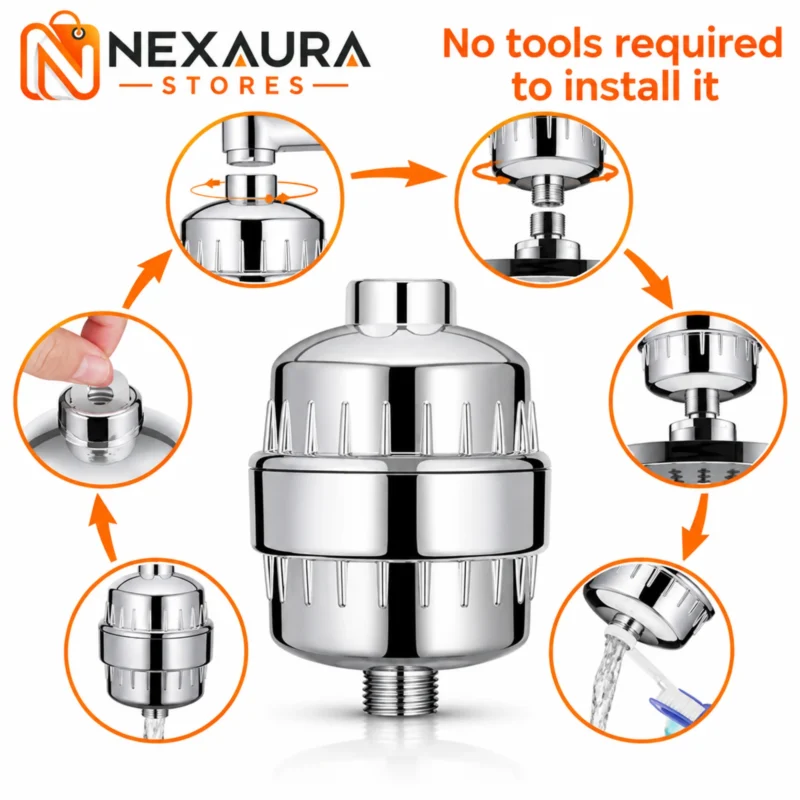
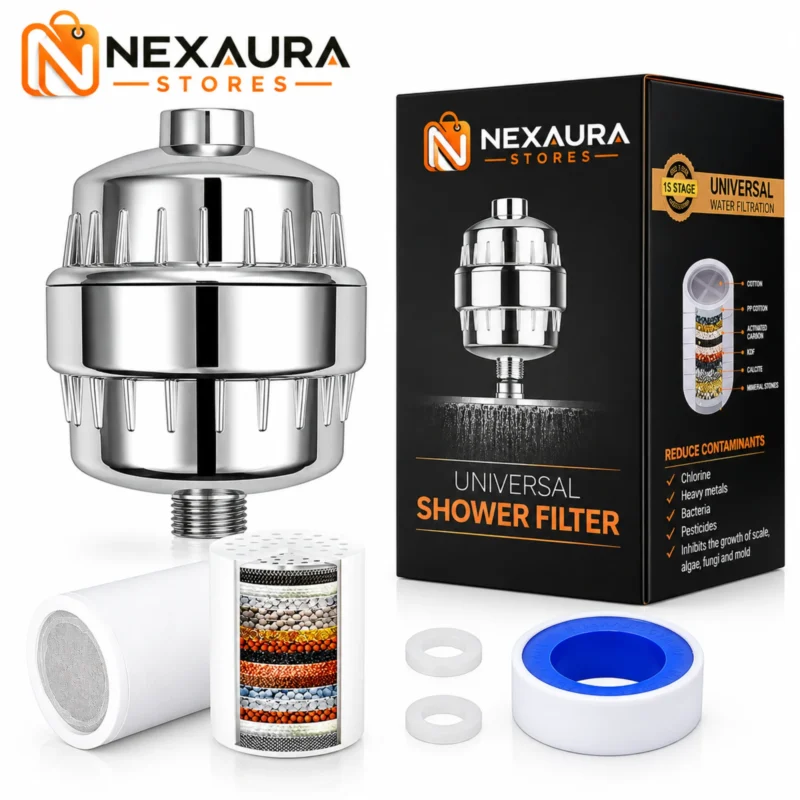
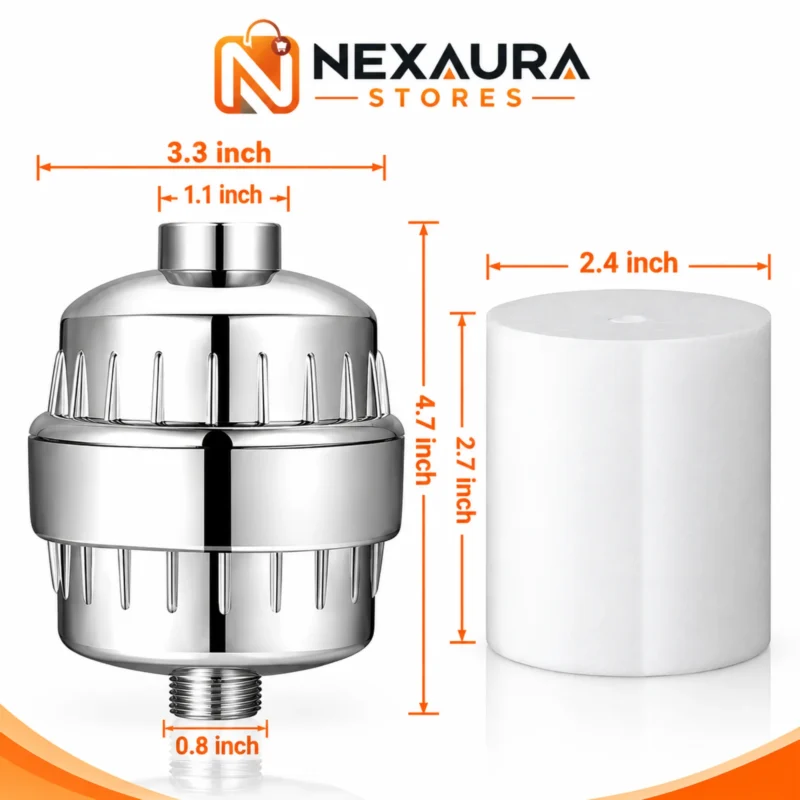
A traditional whole-house water softener costs anywhere from £400 to £1,500 or more, installed, plus salt refills and maintenance. For some households in very hard areas it pays off — but for most people it is overkill. The pragmatic approach is point-of-use: target the two places where hard water hits you hardest, the shower and the kettle, for a fraction of the price. A 20-stage inline shower filter screws directly between your shower hose and shower head, takes minutes to fit with no plumber, and reduces sediment, chlorine and some of the dissolved minerals behind limescale. It will not soften your entire home’s water supply — but your skin, hair and shower head will notice the difference immediately.
The cheap fixes that actually work
1. Fit an inline shower filter
The single best pound-for-pound fix. A multi-stage filter sits inline on your existing shower, so there is no drilling and no plumber — unscrew the head, screw the filter in, reattach. Replace the cartridge every few months (depending on your water hardness) and you get consistently cleaner-feeling water in the shower. It is also the fix that pays back in less cleaning: less limescale on the shower screen and fittings.
2. Upgrade a scaled-up shower head
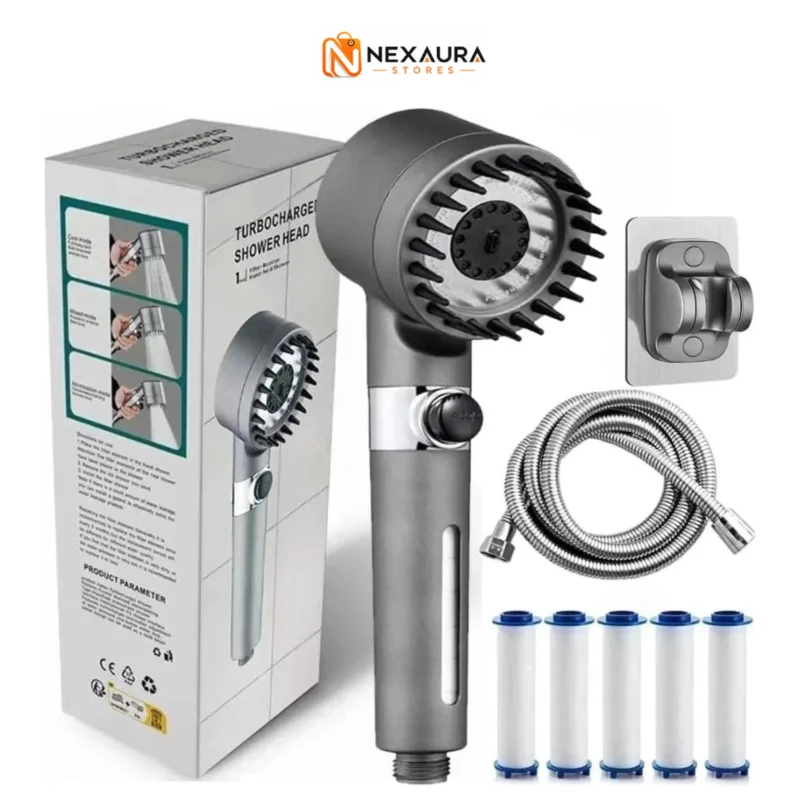
If your current shower head is already caked with scale and spraying in five directions, a filter alone will not save it. A high-pressure shower head with 5 built-in filters and a 1.5m hose replaces the whole unit for just $7.88 — the filters catch sediment before it reaches the nozzles, and the higher-pressure spray compensates for any flow loss. Pair it with an inline filter and the shower is sorted.
3. Descale appliances regularly with cheap acids
White vinegar or citric acid costs pennies and dissolves limescale brilliantly: boil a vinegar-water mix in the kettle and rinse, or soak a removable shower head in a bag of vinegar overnight. In hard-water areas, descale the kettle every 1–3 months — it is the cheapest energy saving you will make all year, because a scaled kettle can waste up to 12% more electricity on every boil.
4. Use dishwasher salt and measured detergent doses
If your dishwasher has a salt compartment, keep it topped up — it is designed for exactly this problem and prevents limescale spots on glasses. And resist the urge to keep adding more detergent: hard water needs a little more soap to lather, but overdosing just leaves residue. Follow the dosing guide, and choose products that are kind to skin if the water leaves you feeling dry.
OUR PICK
20 Stage Shower Head Filter Purifier — $7.38
A 20-stage inline filter that screws between your shower hose and shower head in minutes — no plumber, no £1,000 softener. It traps sediment, reduces chlorine and softens the water hitting your skin and hair, while cutting limescale build-up on your shower fittings. For the price of a couple of coffees, it is the cheapest serious defence against hard water in the bathroom.
A simple monthly routine that keeps limescale under control
You do not need a schedule taped to the fridge — just fold these into things you already do. Weekly, wipe the shower screen and taps after use so deposits never bake on. Monthly, descale the kettle with vinegar and soak the shower head overnight. Every few months, check your inline shower filter cartridge — in very hard areas it works harder and needs replacing sooner. And once a year, check your boiler’s service sticker: in hard-water regions, a boiler service every 12–18 months keeps efficiency from quietly sliding. Ten minutes a month beats replacing a kettle every two years.
5 mistakes to avoid with hard water
- Ignoring the kettle. It scales fastest and is the easiest win — a descaled kettle uses up to 12% less electricity per boil.
- Jumping straight to a £1,000 softener. Try point-of-use fixes first; for most households a shower filter plus regular descaling solves the felt problem.
- Expecting a shower filter to soften the whole house. It treats the shower only — your kettle and washing machine still need descaling.
- Never replacing the filter cartridge. A spent cartridge does nothing; in hard areas, check it every few months.
- Overdosing detergent. Hard water needs a touch more soap to lather, but piling it on leaves residue on clothes and dishes — follow the dosing guide.
Frequently asked questions
Is hard water bad for your health?
No. Hard water is safe to drink, and the dissolved calcium and magnesium are harmless minerals. The damage is financial and cosmetic — worn-out appliances, higher energy bills, limescale stains and dry-feeling skin — not medical.
What is the cheapest way to deal with hard water?
Fit an inline shower filter (under $8) for the bathroom and descale the kettle regularly with cheap white vinegar or citric acid. Those two steps cover the places where hard water hits you hardest, for a few pounds a year.
Do shower filters actually soften water?
They reduce sediment, chlorine and some dissolved minerals, which noticeably improves the shower experience — softer-feeling water, less residue on skin and less limescale on fittings. They do not replicate a whole-house softener, but for the shower itself they punch far above their price.
How often should I descale my kettle in a hard-water area?
Every 1–3 months, depending on your area’s hardness. A visible layer of furring is your signal. Regular descaling keeps the kettle efficient — a scaled kettle can use up to 12% more electricity — and extends its life from around 2 years towards the national average of 4–5.
How do I check how hard my water is?
Look for white chalky deposits on taps and shower screens, spots on glasses, and a kettle that furs up quickly. For an exact figure, every UK water company publishes water-hardness data by postcode on its website.
Will a water softener pay for itself?
In very hard areas with expensive appliances to protect, possibly — but at £400–£1,500+ installed, it is a big upfront bet. For most households, cheap point-of-use fixes — a shower filter, regular descaling, dishwasher salt — recover most of the benefit for a tiny fraction of the cost.
READY TO BEAT LIMESCALE?
Shop Home & Garden at Nexaura Stores
Shower filters, shower heads and home essentials — secure checkout and UK delivery as standard.