 NEXAURA STORES

 Sell on Nexaura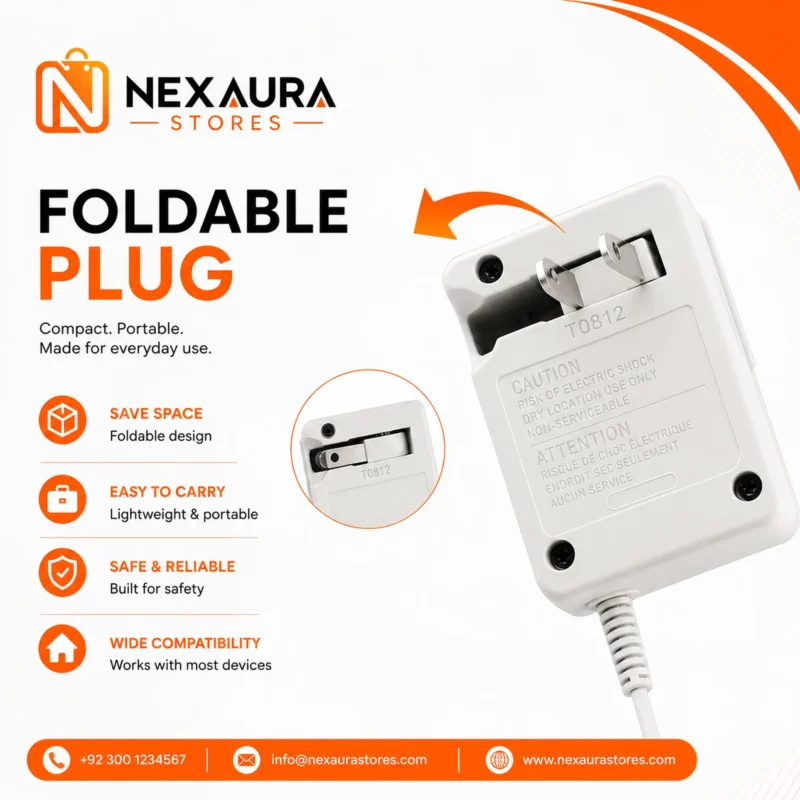
NEXAURA BUYING GUIDE
Keeping Retro Handhelds Alive: Nintendo DS Chargers & Care (UK Guide 2026)
Dig out your old Nintendo DS and the charger has gone walkabout — again. Here is how to find the right replacement, care for your handhelds, and keep them running for years.
The Nintendo DS family is twenty years old, and millions of them are still sitting in drawers across the UK — along with Game Boys, PSPs and their long-lost chargers. The consoles themselves are famously tough, but the accessories are not: cables fray, plugs go missing in house moves, and batteries slowly fade. The good news is that keeping a retro handheld alive in 2026 is cheap and easy, provided you get the right charger and treat the battery kindly.
This guide covers which charger fits which model, what to check before you buy a replacement, and the simple charging, cleaning and storage habits that add years to your handheld’s life.
Why the charger is usually the first thing to fail
Console electronics age gracefully. Cables do not. The weak points on any handheld charger are always the same: the point where the cable meets the plug, the thin DC lead that gets yanked across the room, and the connector tip itself, which collects dust and pocket lint for a decade. A charger that only works at certain angles is not dying — its cable is already dead.
Original Nintendo and Sony chargers are also getting genuinely old. Even a well-kept one from 2006 is approaching its twentieth birthday, and capacitors inside the power brick degrade over time. If your handheld takes longer to charge than it used to, or the orange charging light flickers when you wiggle the cable, the charger — not the console — is the prime suspect.
Which charger does your handheld actually need?
This is where most people go wrong: Nintendo’s handhelds do not all share one charger, and buying the wrong one is a common waste of money. Match your model below.
DSi, DSi XL, 2DS, 3DS and New 3DS
These all use the same small rounded connector — Nintendo standardised it from the DSi onwards. If your console has a DSi, 2DS or 3DS badge, one replacement adapter covers the whole family. This is the most common charger people are searching for, and happily the easiest to replace.

One adapter covers the whole DSi / 2DS / 3DS family.
DS Lite
The DS Lite uses a slightly different connector from the DSi family — slimmer and more rectangular. Some aftermarket chargers ship with interchangeable tips covering both the DS Lite and the DSi/3DS standard, which is ideal if your household has more than one generation. Check the listing’s compatibility list before you buy.
Original “phat” DS and Game Boy Advance SP
The very first DS shares its charger with the Game Boy Advance SP — a squat, chunky connector unique to that era. These are harder to find new, so treat any working one you still own as precious.
Sony PSP (1000 / 2000 / 3000 series)
The PSP uses its own barrel-style power supply, completely separate from Nintendo’s connectors. If your PSP will not hold a charge, try a replacement adapter before blaming the battery — tired power bricks are a far more common cause of slow or failed charging than dead cells.

The PSP needs its own dedicated power supply.
OUR PICK
AC Adapter Wall Charger for Nintendo DSi / 2DS / 3DS / DSi XL — £4.99
The direct replacement for the charger most people have lost. Compatible with the DSi, DSi XL, 2DS, 3DS, 3DS XL and New 3DS, with a UK wall plug and a generous cable length for couch gaming. At under a fiver it costs less than a coffee — and it will bring a drawer-bound console back to life.
Charging habits that keep old batteries alive
Most DS and PSP batteries are lithium-ion or lithium-polymer cells. They hate two things: being stored completely flat, and being cooked. A few habits make a real difference:
- Do not store it dead. If you are putting a handheld away for months, charge it to around 50–70% first. A lithium cell left at zero volts can refuse to wake up ever again.
- Unplug when full. These consoles have no modern battery-management tricks. Leaving one on charge for weeks is harmless at first, but sustained heat slowly degrades the cells.
- Charge at room temperature. Cold lofts and hot cars are battery killers. A drawer or shelf at normal room temperature is ideal.
- Cycle it occasionally. Once every few months, charge a stored handheld to full, play for a while, then top it back up to storage level. This keeps the cell chemistry responsive.
- Use the right voltage. All the UK adapters in this guide are mains-rated for UK sockets. Never use a travel adapter on a foreign charger — mismatched power bricks fry handhelds fast.
Cleaning, storage and shell care
A decade of dust lives inside most retro handhelds. A soft dry brush around the cartridge slot, buttons and charger port takes two minutes and can fix “dead” buttons that are simply clogged. For grimy shells, a barely damp microfibre cloth works; keep liquids away from the screens and never submerge anything.
For storage, keep the console in a case or sleeve rather than loose in a drawer — it is the pressure on sticks, hinges and shoulder buttons that causes most physical wear. And if you ever need to open a handheld for a battery swap or a deep clean, you will need the right drivers: Nintendo and Sony both use tri-wing screws specifically designed to keep casual tools out. A precision electronics screwdriver set with tri-wing bits, like the 115-in-1 precision screwdriver set, turns a battery replacement into a ten-minute job instead of a stripped-screw disaster.
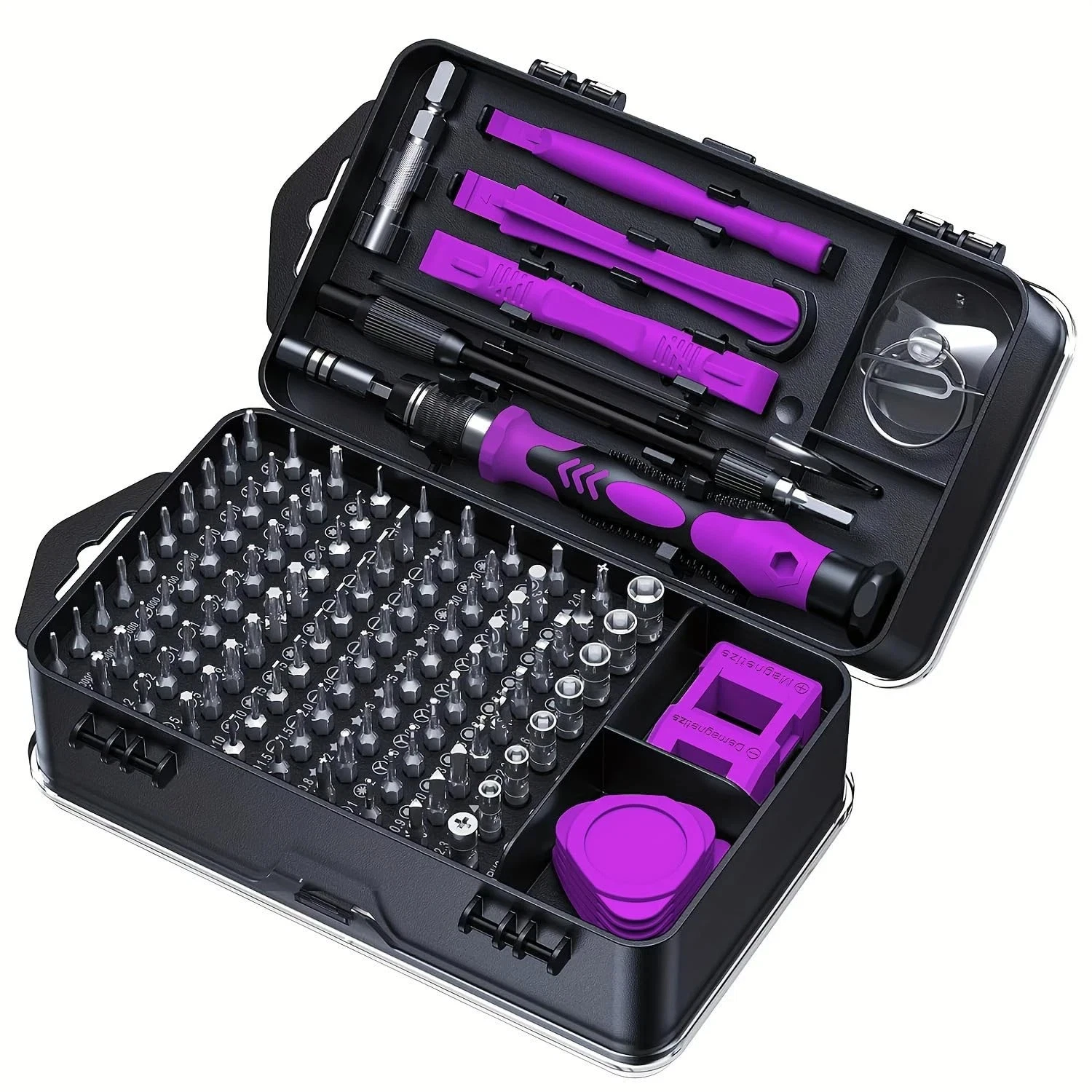
The right bits make battery swaps and deep cleans painless.
When it is the battery, not the charger
A replacement charger fixes most “my DS won’t charge” cases — but not all. Here is how to tell which one you are dealing with. If the orange charging light comes on but the battery drains in minutes, the cell is worn out and needs replacing. If no charging light appears at all, swap the charger first; adapters are cheaper than batteries and fail more often. And if the battery looks swollen or the case is bulging, stop using it immediately and dispose of it safely — a puffed lithium cell is a fire risk, not a DIY project.
Replacement batteries for the DS and PSP are widely available and usually slot straight in once the back cover is off. The same logic applies to PSP owners: if you have already ruled out the power supply with a fresh PSP AC adapter and the console still will not hold charge, a new battery is the next £10 step — not a new console.

Wiggle the cable — if the charging light flickers, the charger is done.
5 mistakes retro owners keep making
- Buying the wrong connector. DSi-family and DS Lite chargers look similar at a glance. Check the model badge before ordering.
- Storing the console fully drained. The single biggest killer of lithium cells in drawers. Half-charge before long storage.
- Wrapping the cable tightly. Tight coils snap internal wires at the plug end. Loose loops only.
- Forcing tri-wing screws with the wrong driver. Nintendo’s security screws laugh at standard Phillips heads — and stripped screws make future repairs miserable. Use proper tri-wing bits.
- Binning a working console. A “dead” DS usually needs a £5 charger, not a £150 replacement. Test the accessories before giving up on the hardware.
Frequently asked questions
Can I use a DSi charger on a 3DS?
Yes. The DSi, DSi XL, 2DS, 3DS, 3DS XL and New 3DS all use the same connector, so one adapter covers the entire family.
Does the DS Lite use the same charger as the DSi?
No — the DS Lite has a slightly different connector. Many aftermarket chargers include both tips, so check the compatibility list before buying.
My DS charges but dies in minutes. Is the battery dead?
Almost certainly. If the orange charging light behaves normally but runtime is tiny, the lithium cell is worn out. Replacement batteries are cheap and usually a straightforward swap with the right screwdriver.
Are third-party DS chargers safe?
Yes, provided they are UK mains-rated with the correct connector and voltage. Buy from a reputable seller, and avoid no-name adapters with no safety markings.
Can a PSP use a Nintendo charger?
No — the PSP uses a completely different barrel connector and its own power supply. The two are not interchangeable.
How should I store my DS if I am not playing it?
Charge it to about half, power it off fully, and keep it in a case at room temperature. Top it up every few months and it will be ready whenever nostalgia strikes.
REVIVE YOUR RETRO HANDHELD
Shop Electronics at Nexaura Stores
Chargers, adapters and accessories for your favourite retro consoles — secure checkout and UK delivery as standard.