 NEXAURA STORES


 Sell on Nexaura
NEXAURA BUYING GUIDE
7 Winter Car Essentials Every Driver Should Own (UK Guide 2026)
Frost, ice and dark mornings are coming. Here are the seven essentials that keep you safe, warm and legal on UK winter roads — all for less than the cost of a tank of fuel.
British winter driving is a special kind of miserable: scraped windscreens at 7am, black ice you never saw coming, and a battery that chooses the coldest morning of the year to give up. Most winter car trouble is entirely preventable, and the fix is not expensive — it is simply a small kit of well-chosen essentials kept in the car from November to March.
This guide covers the seven winter car essentials every UK driver should own, in order of importance. They are chosen for genuine usefulness, not gadget appeal — and each one costs less than a takeaway for two.
1. An ice scraper and a proper de-icer
Start with the basics. A dedicated ice scraper with a sturdy blade clears frost far faster — and with far less arm ache — than an old CD case or credit card, and it will not scratch the glass. Pair it with a spray de-icer for thick ice and frozen mirrors, and keep a microfibre cloth on hand for the inside of the windscreen, which mists up in cold weather.
The real tip: clear ALL the glass before you move. A small porthole in the frost is not good enough — it is also illegal. Driving with a windscreen obscured by ice can land you a £100 fine and three penalty points under careless driving rules. Give yourself five extra minutes, scrape properly, and top up the washer fluid with winter-rated fluid that will not freeze in the lines.
2. A phone mount that holds through frost and potholes
Holding your phone while driving carries a £200 fine and six penalty points in the UK — and winter glare, dark roads and bad weather make distraction even more dangerous. A solid phone mount is one of the cheapest safety upgrades you can buy. Look for a mount that grips both dashboard and windscreen, rotates 360 degrees so you can switch between portrait navigation and landscape calls, and accepts a wide range of phone sizes including cases.

OUR PICK
Magnetic Phone Car Mount 360° — £9.61
Universal dashboard and windscreen fitting with a strong magnetic hold that survives potholes and frost-covered starts. Full 360° rotation for navigation or calls, one-handed placement, and it works with your existing case. The simplest way to stay hands-free and legal this winter.
3. A way to charge on the move — without tangled cables
Cold weather drains phone batteries noticeably faster, and winter is exactly when you need your phone most: sat-nav to reroute around a closed road, a torch at a dark lay-by, a call to breakdown cover. A charging cable dangling across the cabin is one more distraction you do not need. A Qi wireless car charger that mounts on the air vent solves both problems at once — the phone charges every time you set it down, and there is nothing to plug in or unplug.

Look for auto-clamping arms that lock the phone in when it touches the base and release with a button — no fiddling while driving. The Wireless Car Charger Phone Mount at Nexaura Stores (£11.98) fits standard air vents, charges Qi-enabled phones and keeps your screen visible for navigation, so you never have to choose between directions and a working battery.
4. Warmth for long, cold commutes
Car seats are cold, and heating the whole cabin takes the engine several minutes — longer on the short runs where winter commutes hurt most. A memory foam seat cushion makes an immediate difference: it insulates you from a freezing seat, supports your back and tailbone on long dark drives, and costs far less than a heated seat pad that needs wiring in.
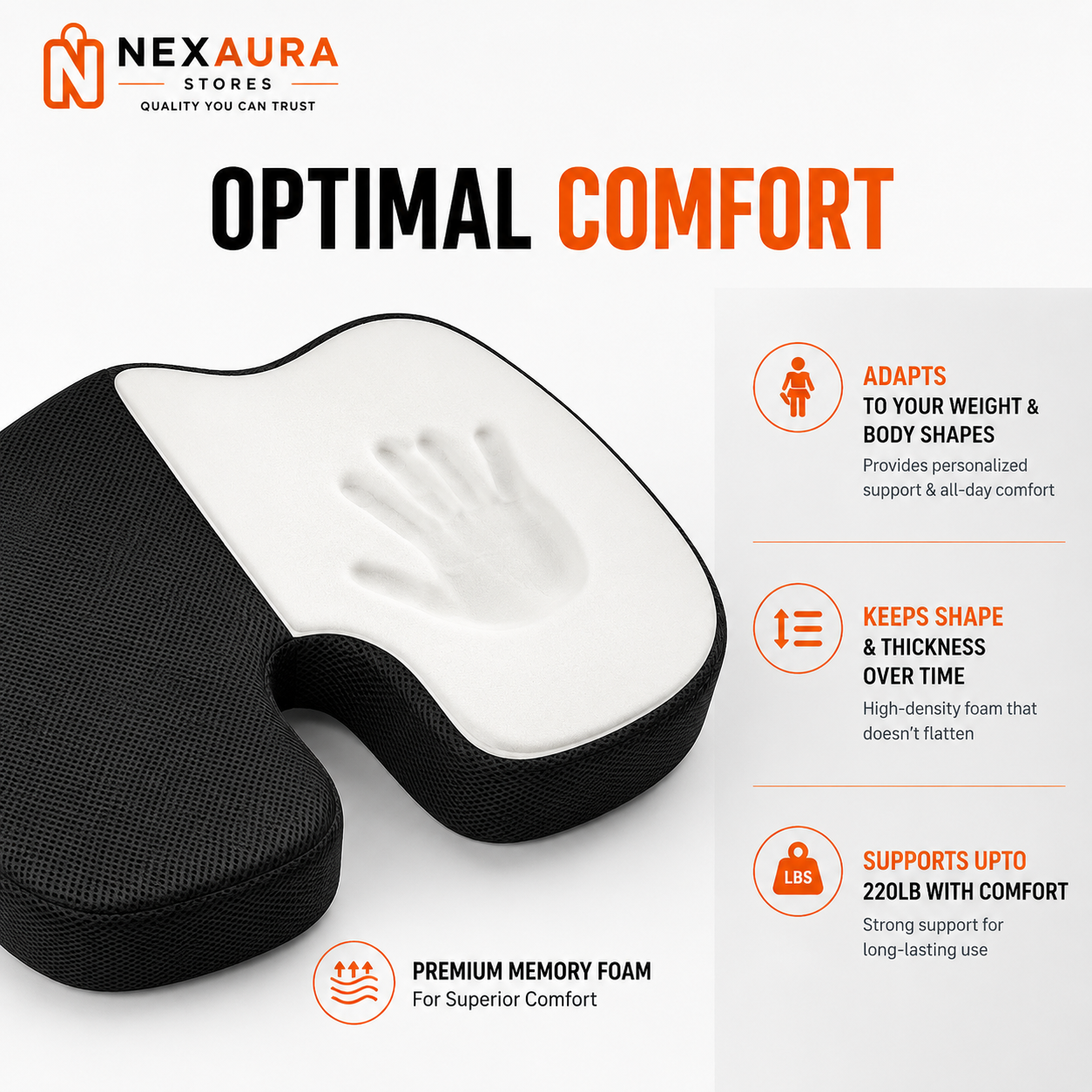
The Memory Foam Seat Cushion (£9.99) works in the car, the office chair and anywhere else you sit, with contoured support for the coccyx and tailbone. Pair it with a blanket in the boot (see below) and you are covered whether the commute runs smoothly or you end up queuing on a closed motorway at midnight.
5. An emergency kit in the boot
Breakdowns happen most in winter, and a breakdown at 1°C is a very different experience from one in July. A basic emergency kit fits in a small bag behind the seats: a warm blanket or spare coat, a torch with fresh batteries, a high-visibility vest, jump leads or a jump starter pack, and a bottle of water plus a cereal bar or two. If you have space, add a small bag of cat litter or grit — it gives tyres grip when you are stuck on ice, and it is lighter than a bag of sand.
The rule of thumb: pack for a two-hour wait. Roadside assistance in a cold snap can take far longer than you expect, and the AA and RAC both report their busiest days arriving with the first frost. Keeping the kit in the car from November is a five-minute job that buys genuine peace of mind.
6. Tyre checks before the temperature drops
Your tyres are your only contact with the road, and stopping distances roughly double on wet winter surfaces. UK law requires 1.6mm of tread across the central three-quarters of the tyre — but safety bodies recommend replacing tyres at 3mm for winter driving, because tread below that point struggles to clear water. The 20p test takes ten seconds: insert a 20p coin into the tread, and if the outer band is visible, it is time for new tyres.
Check pressures too — cold air lowers them, and under-inflated tyres grip worse and wear faster. Your handbook lists the correct pressure, and most petrol station air pumps are free. Do this once when the clocks go back and you are set for the season.
7. Wash off the road salt
Gritting lorries are a winter lifeline, but the salt they spread eats paintwork and accelerates rust on wheel arches, sills and underbody panels. A monthly wash through winter pays for itself in preserved resale value. Pay attention to the wheel wells and the lower doors, where salt spray collects, and dry the door seals afterwards so they do not freeze shut overnight.

If washing in the cold puts you off, the right tools make it a ten-minute job rather than a chore — and keeping the lights and number plates clean is a legal requirement that officers do check in winter.
How to fit it all in the boot
All seven essentials fit easily in a medium boot if you pack smart. Keep the scraper, de-icer and microfibre cloth up front in the door pocket or under the passenger seat — you need them before the car moves. The phone mount, charger and cushion stay in place permanently. The emergency kit lives in a single bag in the boot corner, checked once a month for batteries and snacks. Total cost of the whole kit, excluding tyres: under £40. Total value on the first freezing morning: far more.
Winter car essentials: FAQ
Do I need winter tyres in the UK?
Not usually. UK winters are wet rather than deeply snowy, so good all-season or standard tyres with at least 3mm of tread are fine for most drivers. Winter tyres help in sustained sub-7°C conditions, but the bigger wins for most people are tread depth and correct pressures.
Is it illegal to drive with a frosty windscreen?
Yes, effectively. Your windscreen and all other windows must be clear before you drive. Police can issue a £100 fixed penalty and three points for driving without a clear view, and it can be treated as careless driving if visibility contributed to an incident.
Why does my phone battery die faster in winter?
Lithium-ion batteries lose capacity in cold temperatures, and the phone works harder — brighter screen for dark roads, constant GPS for navigation — at exactly the wrong time. A vent-mounted wireless charger keeps it topped up on every journey, so you always start with a usable battery.
Can I get fined for touching my phone in traffic?
Yes — holding a phone or sat-nav while driving is £200 and six penalty points, even when stopped at lights or in a queue. A secure mount keeps the phone hands-free, which is the only safe and legal way to follow navigation.
How often should I wash my car in winter?
Once a month at minimum, and ideally within a week of any gritting in your area. Focus on wheel arches, sills and underbody areas where salt collects, and always dry the door and boot seals so they do not freeze shut.
DRIVE PREPARED THIS WINTER
Shop Car Essentials at Nexaura Stores
Phone mounts, car chargers and comfort upgrades for winter driving — secure checkout and UK delivery as standard.