 NEXAURA STORES


 Sell on Nexaura
NEXAURA BUYING GUIDE
How to Keep Your Home Warm Without Turning the Heating Up (UK Guide 2026)
Heating bills climb every winter, but a cold house is rarely fixed by simply turning the thermostat higher. Seal the leaks, warm yourself rather than empty rooms, and use the heat you already pay for properly — and the whole house feels warmer for less.
Every winter the same pattern repeats: the heating goes on earlier, stays on longer, and the house still feels chilly in the evenings. The instinct is to turn the thermostat up another degree or two and hope for the best. The problem is that a house losing heat through gaps, thin windows and cold floors will keep losing it no matter how high you set the dial — you are paying to heat the street as much as your living room.
Keeping warm cheaply is not about enduring a cold house or buying expensive equipment. It comes down to three practical moves: stop warm air escaping, keep your own body warm where it counts, and make the heating you do use work harder. Each one costs very little, most can be done in an afternoon, and together they make a noticeable difference within days. Here is how to do it properly, room by room.
Start by finding where the warmth escapes
Before you buy anything, spend ten minutes hunting for draughts. On a cold, windy day, walk slowly around each room with a damp hand held near door frames, window edges, letterboxes, keyholes and loft hatches. A draught feels unmistakable on damp skin, and most homes have several. Older sash windows and front doors are the usual culprits, but check the less obvious spots too: gaps where pipes enter the wall, the edges of a cat flap, and the hatch to the loft, which often has no seal at all.
Write down what you find, room by room, because draught-proofing works best as one planned job rather than a series of impulse buys. A draughty front door alone can account for a surprising share of a home’s heat loss, and sealing it is usually a job of minutes, not hours.
Seal doors and windows — the cheapest warmth you can buy
Draught-proofing is consistently one of the best-value home improvements there is, because it attacks the problem at its source. Warm air is lighter than cold air, so it rises and escapes through gaps at the top of doors and windows while cold air creeps in underneath. Sealing those gaps keeps the warm air where it belongs, and the room reaches a comfortable temperature faster — which means the heating can run for less time.

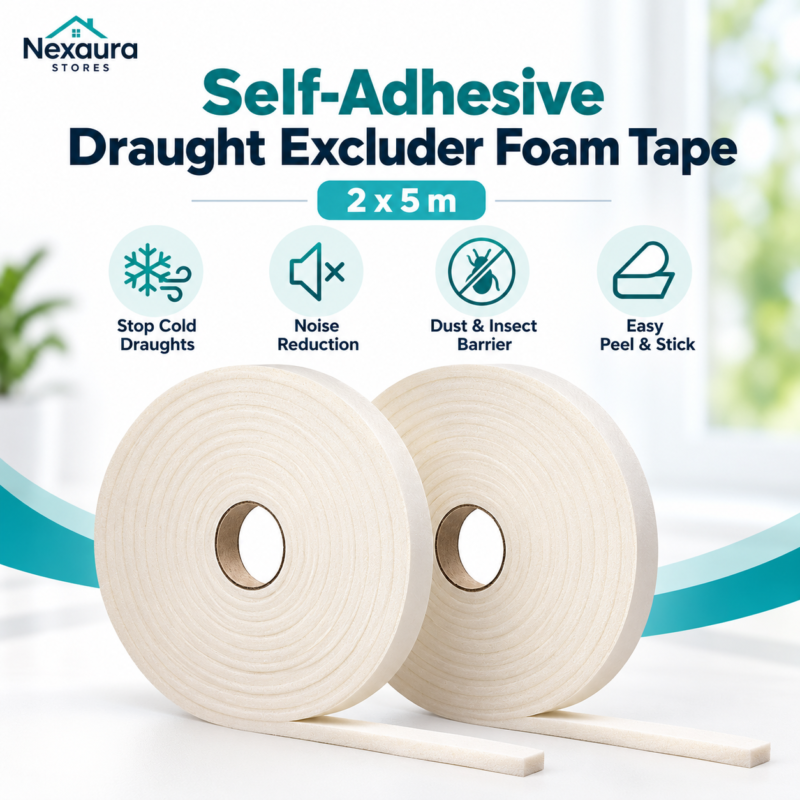
A self-adhesive draught excluder foam tape is the simplest way to do it. The tape sticks to the door or window frame, compresses when the door closes, and springs back when it opens, forming a seal every time. There are no tools, no screws and no mess: clean the frame, measure, cut, peel and press. Two 5-metre rolls give you 10 metres in total, which is usually enough for several doors and windows, plus a loft hatch.
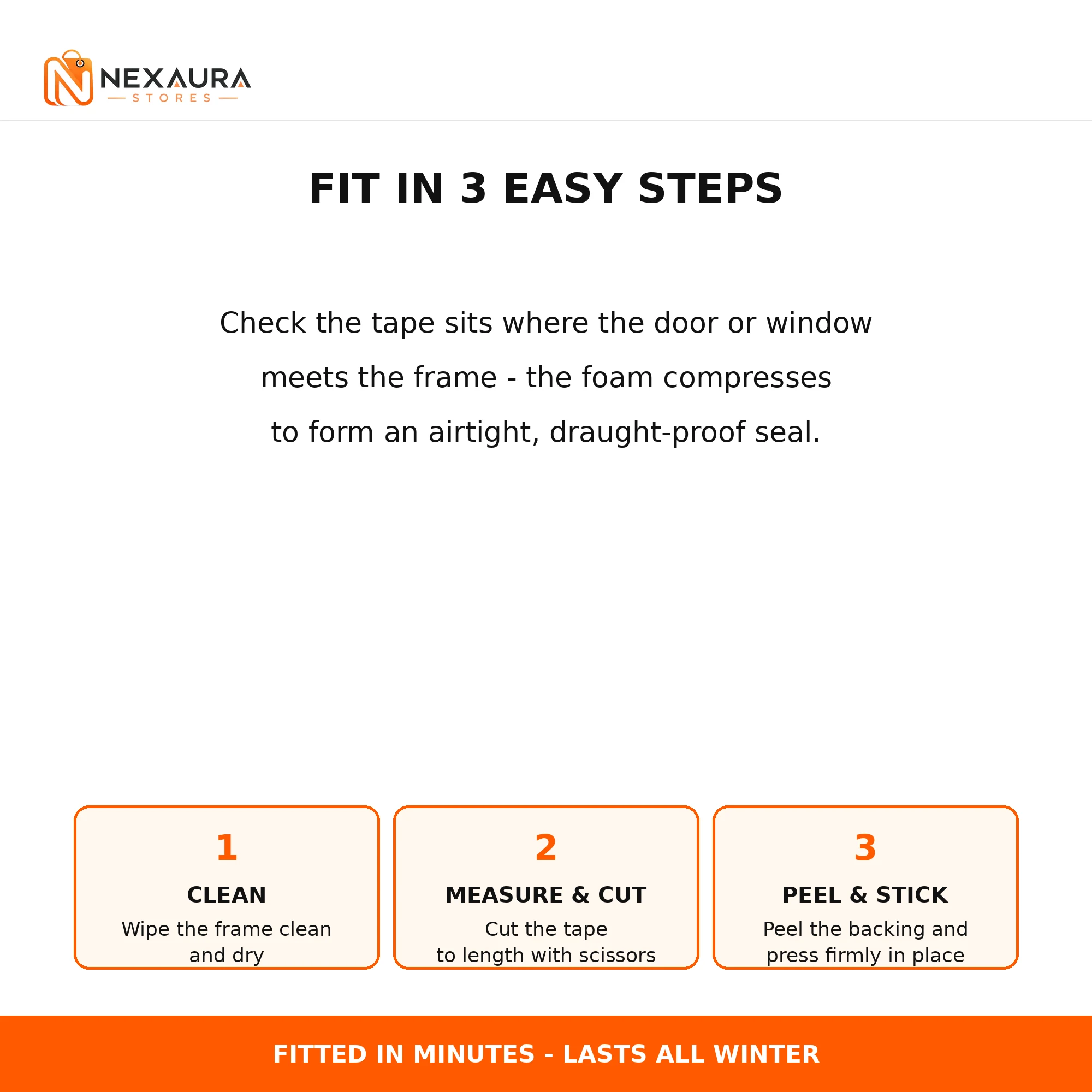
A few fitting tips make the difference between a seal that lasts a winter and one that peels off in a week. Clean the frame properly first — dust and grease are the main reason adhesive tape fails. Fit the tape to the frame, not the door itself, so it is not dragged and stretched every time the door moves. And do not seal every gap in the house indiscriminately: rooms with gas fires, cookers or boilers need some ventilation to stay safe, and bathrooms and kitchens need airflow to avoid condensation. Seal the living rooms and bedrooms, and leave intentional ventilation where the house genuinely needs it.
Heat the person, not the whole house
The most overlooked trick in winter comfort is also the simplest: you do not need every room at the same temperature, and you do not need to be warm everywhere at once. You need to be warm where you actually are. A person sitting still at a desk or on a sofa loses heat steadily, and cold feet are usually the first thing that makes the whole body feel cold. Warm the feet, add a layer, and the thermostat can often stay a degree or two lower without anyone noticing.
Layering works because trapped air insulates. A thin base layer, a jumper, and a warm pair of socks will keep you more comfortable than one very thick garment, and you can adjust as the evening goes on. This matters most for people who work from home or spend long evenings in one room: heating that single room and dressing for it beats heating the whole house to the same temperature all day.

Thermal boot socks are one of the easiest upgrades here. A boot-length, cotton-blend sock in a 6-pack covers a full week, fits UK sizes 6–11, and works as well under wellies on a frosty walk as it does under slippers at home. If your feet are warm, the rest of you feels warmer — it is a small change, but it is the one people notice first on a cold evening. Keep a pair by the door for coming in from outside, and a pair by the sofa for the evening.
Keep your drink hot without reheating it five times
It sounds trivial, but the cold cup of tea is a small daily annoyance that says something real about winter comfort: a warm drink warms your hands and your core, and a lukewarm one does neither. Anyone working at a desk knows the cycle — make a hot drink, get absorbed in work, come back to it cold, microwave it, repeat. A heated coaster breaks that cycle by holding the drink at temperature while you work.

A USB mug warmer is a small heating pad that plugs into a laptop or USB charger and keeps a mug warm at one of three temperature settings. It is ideal for a home office, where the kettle is downstairs and the work is not. Use a flat-bottomed ceramic mug for the best contact, keep the pad on a stable surface away from papers, and switch it off when you leave the desk. It will not replace a good flask for a long walk, but for a working day at home it is a genuinely useful piece of kit — and a warm drink in your hands makes a cool room feel far more bearable.
Make the heating you do use work harder
Once the draughts are sealed, the next gains come from using your existing heating properly. Close the doors of rooms you are heating, so warm air stays where you are instead of drifting down a cold hallway. Open curtains on south-facing windows during the day to let free solar heat in, then close them at dusk — curtains act as an extra layer of insulation over glass, which loses heat far faster than a wall. Keep furniture away from radiators, so heat circulates into the room instead of warming the back of a sofa.
Two maintenance jobs are worth doing before winter properly sets in. First, bleed any radiator that is cold at the top, which means trapped air is stopping hot water circulating — a radiator key costs pennies and the job takes minutes. Second, check that your thermostat is not fighting a draught: a thermostat mounted in a cold hallway or next to a draughty front door will keep calling for heat long after the living room is comfortable. Moving it, or simply draught-proofing around it, can save a surprising amount over a winter.
Finally, be honest about timing. Heating an empty house all day is wasteful; a timer that brings the house up to temperature half an hour before you arrive does the same job for far less. Use different temperatures for different times of day — a cooler bedroom overnight, a warm living room in the evening. The goal is a house that is warm when and where you need it, and not heated when and where you do not.
OUR PICK
Self-Adhesive Draught Excluder Foam Tape 2 x 5 m – Door & Window Insulation
The single best-value warmth upgrade on this list. Ten metres of self-adhesive foam seals doors, windows and loft hatches in minutes with no tools, and the difference is felt the same evening: fewer cold draughts, rooms that warm up faster, and heating that does not have to work as hard. If you do one thing before winter, make it this one.
Also worth adding to your winter kit: thermal boot socks for warm feet at home and outdoors, and the USB mug warmer for a hot drink that stays hot at your desk. Browse the full Home & Garden range for more everyday essentials.
Frequently asked questions
Does draught-proofing really save money on heating bills?
Yes. Sealing gaps around doors and windows stops warm air escaping and cold air entering, so rooms reach temperature faster and the heating runs for less time. It is one of the cheapest energy-saving measures available, and the payback is usually measured in weeks rather than years.
Should I seal every draught in my house?
No. Seal living rooms and bedrooms, but leave ventilation where it is needed for safety and moisture control — rooms with gas appliances, kitchens and bathrooms all need airflow. Blocking every vent can cause condensation, damp and, with gas appliances, a genuine safety risk.
What temperature should I set my thermostat to in winter?
For most healthy adults, 18–21°C in living areas is comfortable, with bedrooms often fine a little cooler. Dropping the thermostat by just one degree can cut heating use noticeably, especially once draughts are sealed and you are dressed for the season indoors.
Are thermal socks really warmer than ordinary socks?
Yes, provided they fit well. Thermal socks use a thicker, brushed knit that traps more warm air around the foot, and a boot length keeps ankles covered. They work best as part of layering — warm feet plus a jumper beats a single thick layer on its own.
Why is my radiator cold at the top?
Trapped air rises to the top of a radiator and blocks hot water from circulating there. Bleeding the radiator with a radiator key releases the air; you should hear a hiss, then see water, at which point you close the valve. If the problem returns often, ask a heating engineer to check the system pressure.
WARMER HOME, LOWER BILLS
Shop Home & Garden at Nexaura Stores
Draught-proofing, winter warmth and everyday home essentials — secure checkout and UK delivery as standard.