 NEXAURA STORES

 Sell on Nexaura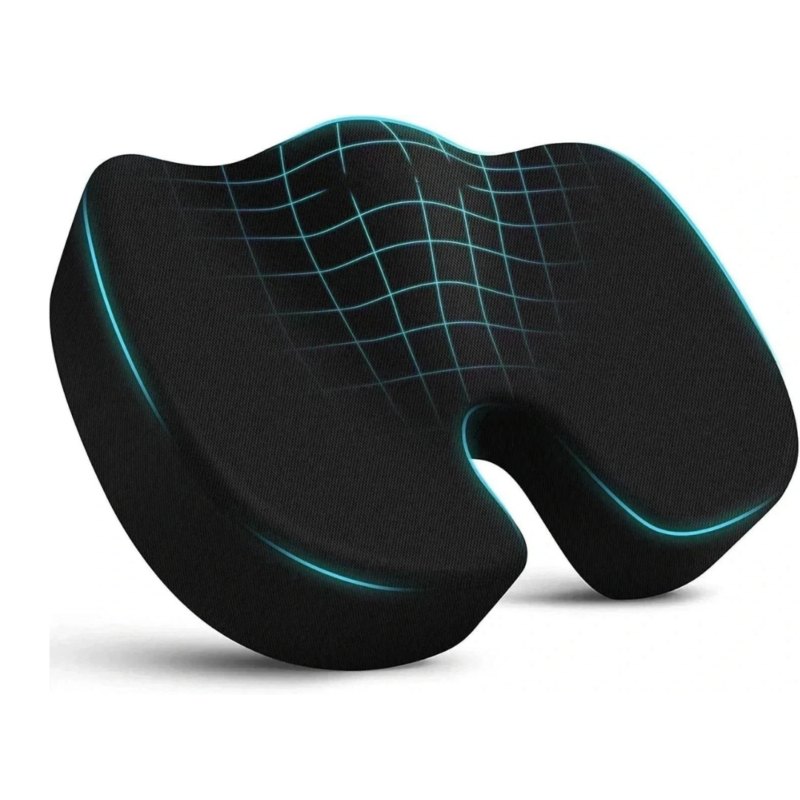
NEXAURA BUYING GUIDE
Memory Foam Seat Cushions: An Office Worker’s Best Friend
Backache by 3pm? A good seat cushion can genuinely change how your workday feels — here is how to choose one, and the common mistakes that waste your money.
If you spend most of your day sitting — at a desk, behind a wheel, or on the sofa — you probably know the feeling: a dull ache in your lower back, numbness in your legs, and a tailbone that protests every time you stand up. The honest truth is that most chairs are not designed for the way we actually sit. A memory foam seat cushion is one of the cheapest, most practical fixes available, and at under £10 it costs less than a single lunch out.
Why sitting all day hurts (even on a “good” chair)
Sitting compresses the spine and cuts blood flow to the lower body. Research consistently links long, uninterrupted sitting to lower-back pain, poor circulation and stiff hips. A flat, hard seat forces your tailbone — the coccyx — to bear weight it was never designed for, and over hours this pressure adds up to real discomfort.
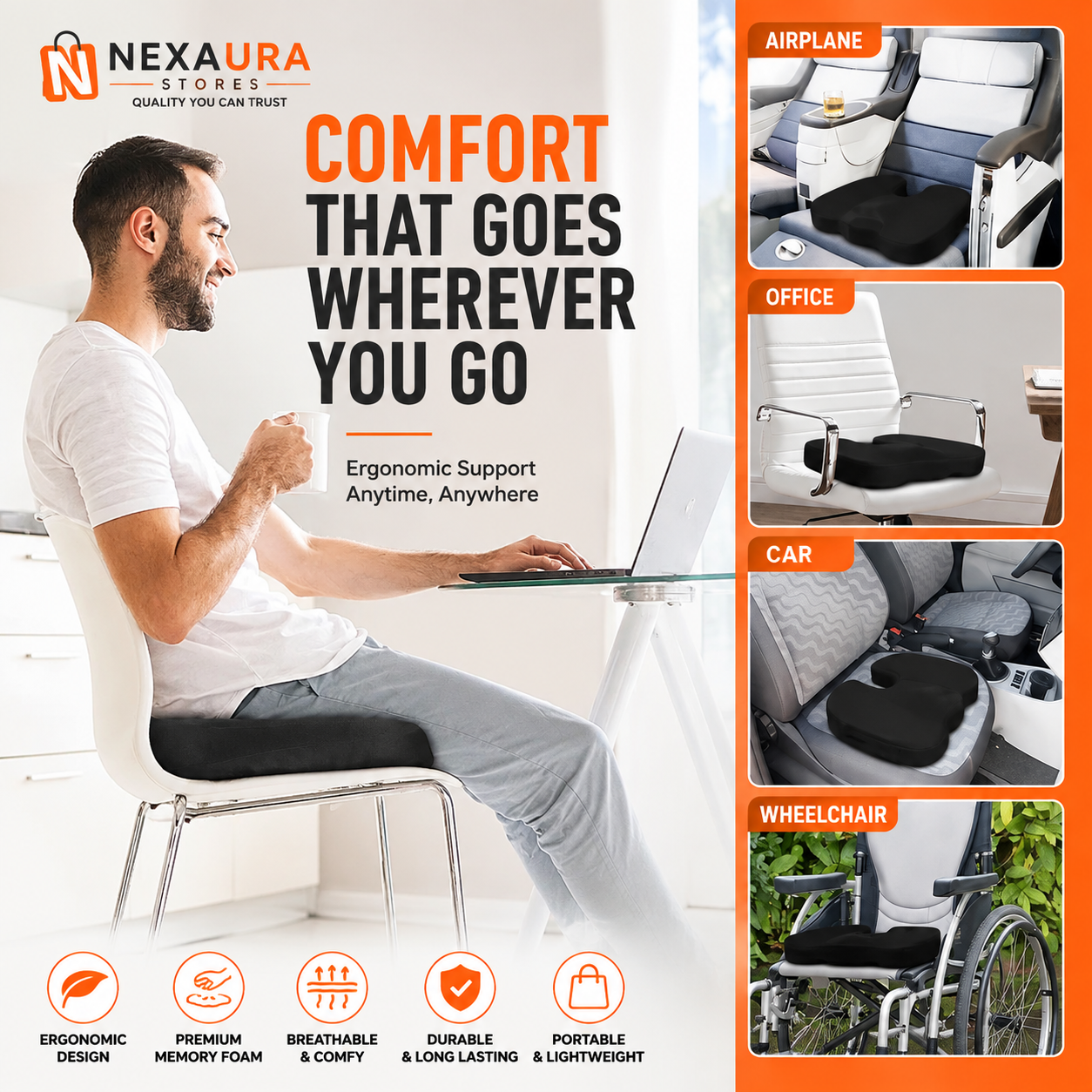
Most office chairs make this worse: the seat pan is often too hard, too flat or too deep for the person sitting in it. An ergonomic chair is the ideal answer, but at several hundred pounds it is not an impulse purchase. A contoured memory foam cushion, by contrast, reshapes the seat you already own — and travels with you to the car, the train or the dining-table desk.
What memory foam actually does for your posture
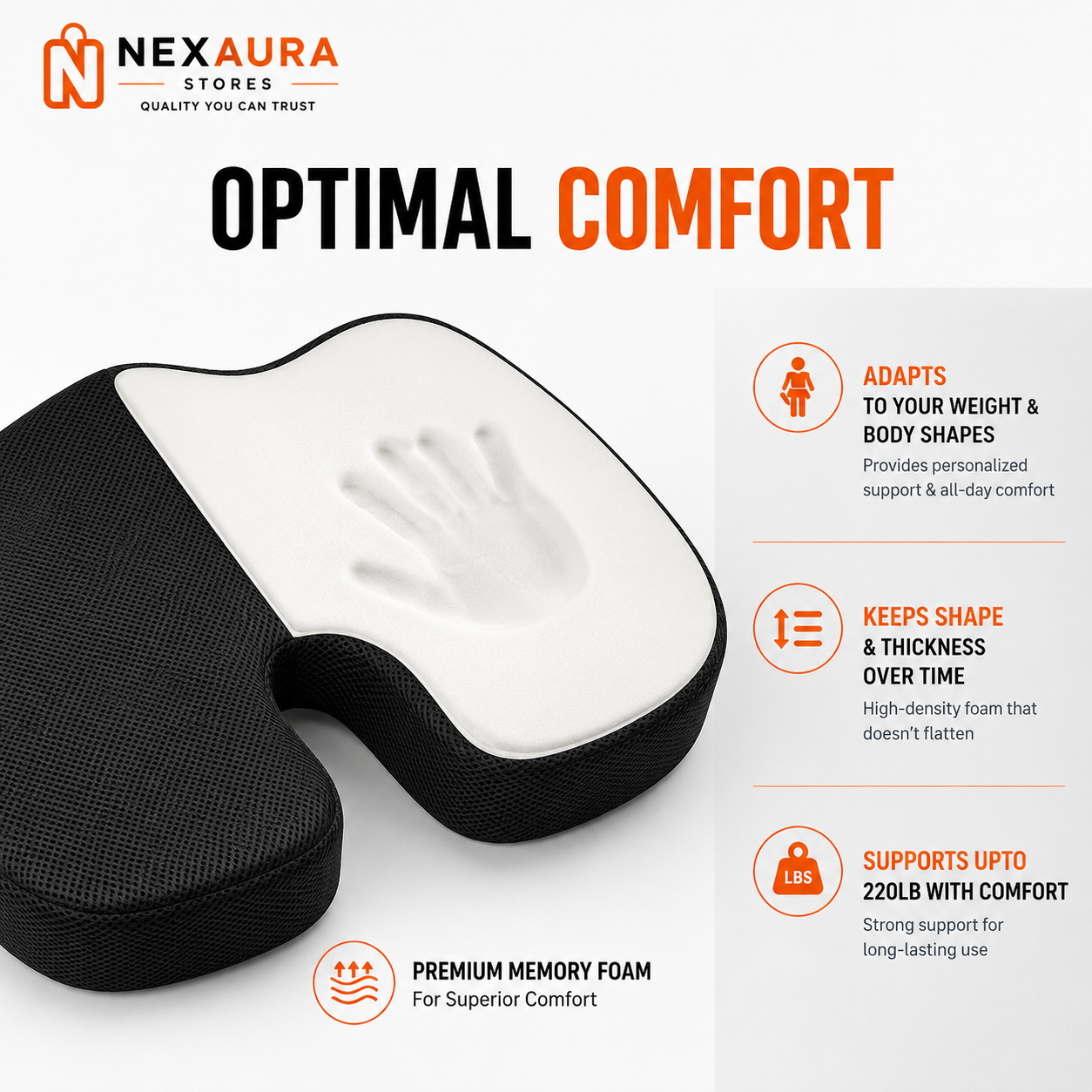
Memory foam is a viscoelastic polyurethane foam that softens in response to body heat and pressure. Instead of fighting your weight like a hard seat, it moulds around your sitting bones and redistributes pressure across a wider area. Three design features make the difference:
1. Pressure redistribution
On a flat chair your body weight concentrates on two small points — your ischial tuberosities, or “sit bones”. Memory foam spreads that load over the whole seat surface, reducing the pressure hotspots that cause numbness and soreness during long sessions.
2. The coccyx cut-out
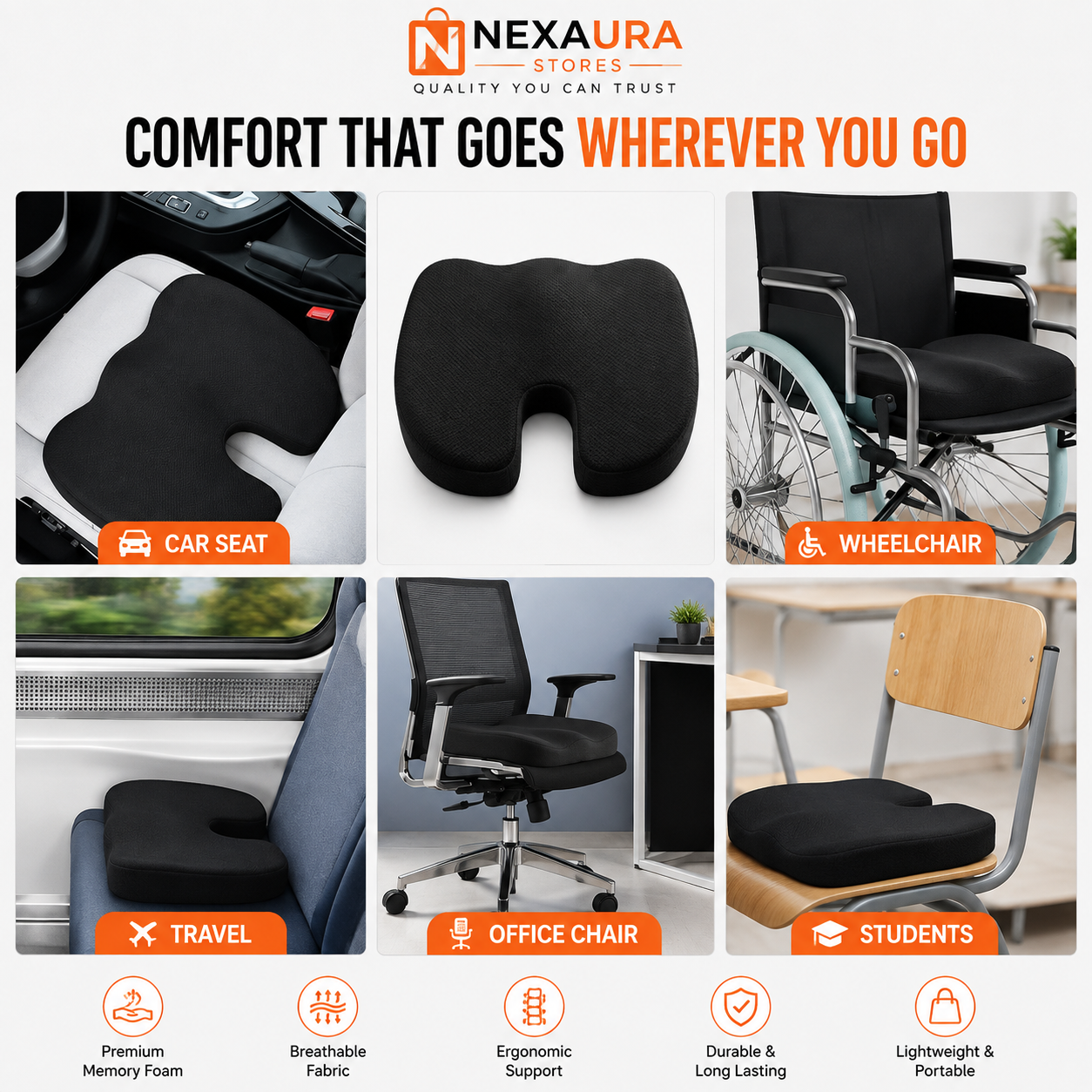
Many seat cushions include a U-shaped or wedge cut-out at the rear. This removes pressure directly beneath the tailbone — the spot that aches most after hours of sitting — and encourages a slightly tilted pelvis that supports the spine’s natural curve.
3. Posture prompting
A slightly raised back edge nudges you out of the slouch. You will not notice it consciously, but it makes it harder to collapse into the C-shape that strains the lower back. It is a gentle, constant reminder to sit taller.
OUR PICK
Memory Foam Seat Cushion — Coccyx & Tailbone Pain Relief — £9.99
Contoured memory foam with a coccyx cut-out for pressure relief, designed for office chairs, car seats and beyond. Moulds to your shape, keeps its support after months of daily use, and travels anywhere you sit. The budget-friendly way to make any chair bearable.
Seat cushion vs lumbar pillow vs a new chair
It helps to know what each product actually fixes, so you buy the right thing first time:
- Seat cushion. Fixes a hard or flat seat. Relieves tailbone and hip pressure, improves circulation in the legs. This is the fix for most people — the seat is usually the worst part of a cheap chair.
- Lumbar pillow. Fixes a chair with no lower-back support. Fills the gap between your lower back and the chair to maintain the spine’s curve. Best used with a seat cushion, not instead of it.
- New ergonomic chair. Fixes everything at once — but costs 20–50 times more than a cushion. If your current chair is structurally fine, a cushion delivers most of the comfort for a fraction of the price.
Start with the seat cushion. If your lower back still complains after a week, add lumbar support. Only replace the chair if the frame itself is broken or the wrong size for you.
What to look for when buying a memory foam seat cushion
Not all cushions are equal. A thin, low-density pad flattens in weeks and changes nothing. Here is what separates the good from the pointless:
1. Foam density and thickness
Look for high-density memory foam at least 7–8cm thick. Cheap cushions use thin, low-density foam that bottoms out — you end up sitting on the hard chair again, just two centimetres higher. A dense cushion holds its shape for years of daily use.
2. Contoured shape with a coccyx cut-out
Flat square pads are little better than a folded towel. A contoured design with a rear cut-out specifically targets tailbone pressure — this single feature is what makes a proper seat cushion worth buying.
3. Removable, washable cover
You will use this every day, so it will collect sweat and dust. A zip-off, machine-washable cover keeps it hygienic. A non-slip base is a bonus — it stops the cushion sliding when you shift position.
4. Right size for your chair
Measure your seat before ordering. A cushion that hangs off the front edge will tilt you forward and strain your thighs; one that is too small leaves your sit bones on hard plastic at the edges. Most standard cushions suit office and dining chairs well.
How to use a seat cushion properly
A cushion helps most when you set it up right. A few practical tips:
- Position it fully back. The cut-out should sit at the rear of the chair, right where your tailbone meets the seat. Pushing it too far forward defeats the purpose.
- Give it a week. Your body has adapted to a bad seat; the first day or two on a contoured cushion can feel unfamiliar. Judge the difference after 5–7 days of normal use.
- Keep moving. No cushion replaces standing and walking. Aim to stand, stretch or walk for a few minutes every hour — set a timer if you have to.
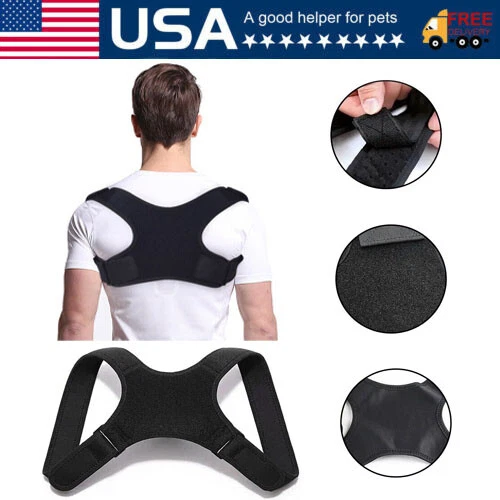
- Pair it with posture support. If your shoulders round forward at the keyboard, a seat cushion alone cannot fix it. An adjustable posture brace (£13.31) gently pulls the shoulders back and works well alongside a cushion for all-day desk comfort.
5 mistakes to avoid when buying a seat cushion
- Buying the cheapest flat pad. A £3 flat sponge compresses to nothing within weeks. Pay for density and a contoured shape — it is still under £10.
- Ignoring the cut-out. Without a coccyx cut-out, your tailbone still bears full weight. It is the single most important design feature for office workers.
- Expecting it to fix your chair entirely. A cushion cannot repair a broken mechanism or a seat at the wrong height. Adjust your chair first: feet flat, knees level, screen at eye height.
- Never washing the cover. Daily-use cushions get grimy fast. A removable cover you can machine-wash keeps the whole thing pleasant to use.
- Using it as an excuse to never stand. Comfort is not a substitute for movement. The healthiest desk setup is still sit–stand–walk, even with the perfect cushion.
Frequently asked questions
Do memory foam seat cushions really work?
Yes, for the problem they solve: hard-seat pressure. By spreading your weight and removing pressure from the tailbone, a good contoured cushion noticeably reduces the aching and numbness of long sitting sessions. They are not medical treatment, but for everyday desk discomfort they are one of the best-value fixes available.
Are memory foam cushions good for office chairs?
They are ideal for them. Office chairs usually have firm, flat seats designed for durability rather than comfort. A cushion with a coccyx cut-out transforms the seat without changing the chair, and it moves with you if you hot-desk or switch rooms.
How long does a memory foam seat cushion last?
A high-density cushion used daily typically keeps its support for 1–2 years before the foam softens noticeably. Low-density cheap pads can flatten in months. If yours has gone flat and no longer springs back, it is time to replace it.
Can a seat cushion help with lower back pain?
It can reduce one common cause: tailbone pressure and slouching on a hard seat. It will not fix disc problems, sciatica or posture habits on its own. If back pain persists beyond a few weeks, see a GP or physiotherapist.
Can I use a seat cushion in the car?
Yes — most contoured cushions work well on car seats and are a popular choice for long commutes and road trips. Check the cushion does not raise you so high that your head clearance or mirror view changes, and never use one on a seat where it interferes with the seatbelt sitting correctly.
What is the best thickness for a seat cushion?
Around 7–8cm of high-density foam suits most adults and standard office chairs. Thinner cushions bottom out under body weight; much thicker ones can leave your feet dangling on a fixed-height chair.
SIT BETTER, FEEL BETTER
Shop Home Comfort at Nexaura Stores
Seat cushions, posture support and everyday home essentials — secure checkout and UK delivery as standard.